Table of Contents
- Understanding Pallet Trucks and Tuggers
- Enhancing Efficiency with Pallet Trucks
- Improving Safety Through Tugger Implementation
- Real-World Applications and Success Stories
- Key Considerations for Implementation
- Conclusion
Warehouse operations are evolving rapidly as companies strive to keep pace with increasing demand and tighter schedules. Among the essentials redefining warehouse logistics are pallet trucks and tuggers, which have quickly become indispensable for efficient, safe, and streamlined material movement. By integrating these tools, warehouses can drastically reduce manual labor, optimize workflows, and minimize operational risks. Understanding the distinct roles of pallet trucks and tuggers and deploying them strategically helps businesses gain a competitive edge. When chosen wisely, these material handling solutions boost employee productivity while supporting a culture of safety. For organizations faced with narrow aisles, tight production schedules, and a focus on reducing workplace injuries, the right equipment is a game-changer.
Pallet trucks, traditionally used in smaller or mid-sized operations, have advanced from their analog roots to electric, ergonomically designed machines. Tuggers, often tasked with heavy or bulk transportation, alleviate the strain on both staff and equipment, helping to ensure smooth operation even during the busiest shifts. Implementing these tools is not just about moving goods efficiently but also about fostering a safer, healthier work environment. Modern warehousing must prioritize safety while delivering rapid fulfillment and consistent order accuracy.
Understanding Pallet Trucks and Tuggers
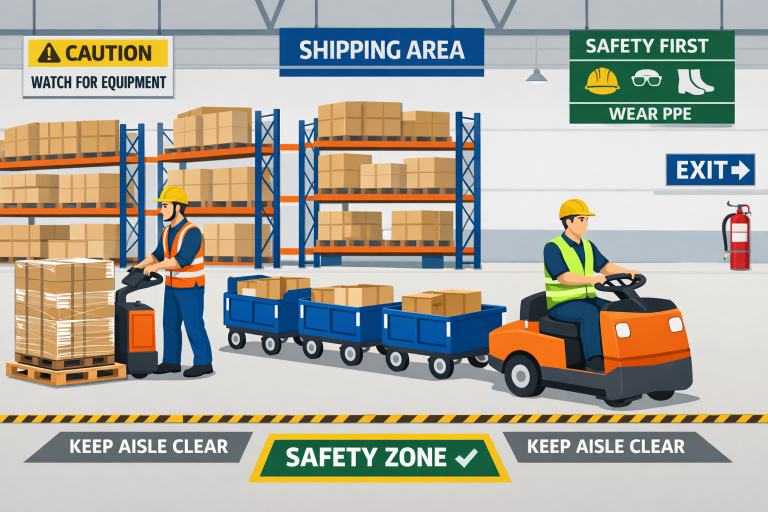
Pallet trucks, or pallet jacks, are foundational material handling tools designed to lift and move heavy pallets over short distances. Available in manual and electric varieties, they offer flexibility for various operational requirements. Manual pallet trucks rely on operator power, making them suitable for light use and smaller warehouses. In contrast, electric pallet trucks feature power-assisted lifting and movement, ideal for higher volumes and longer distances. Tuggers, by contrast, operate as motorized vehicles that tow multiple carts or trailers loaded with goods. By moving multiple loads in a single trip, tuggers drastically increase throughput while reducing the wear and tear associated with individual pallet movements. Their adaptability in both large warehouses and manufacturing plants has made them critical to lean and just-in-time logistics strategies.
Enhancing Efficiency with Pallet Trucks
Efficiency is one of the primary drivers for integrating pallet trucks into warehouse layouts. Electric pallet trucks, in particular, can convey materials faster than manual options, easing the physical burden on staff and narrowing the risk of fatigue-induced errors. According to Meissner Corporation, using advanced pallet trucks results in measurable labor cost reductions and increased process speed. These machines bridge the gap between manual handling and full automation, making them suitable for facilities at various stages of technological adoption.
A reduced need for operator involvement leads to smoother workflow and less time lost between picking, staging, or shipping tasks. Additionally, when integrated with inventory management systems, modern pallet trucks can help track goods in real time, further decreasing the likelihood of misplaced stock and delays.
Improving Safety Through Tugger Implementation
Forklift accidents are a leading cause of workplace injuries in warehouses. Replacing, or at least supplementing, forklift routes with tuggers lessens this risk and promotes a culture of safety. Tuggers are engineered for stability and feature precise maneuverability, allowing operators to move bulk loads with minimal risk. According to a report by OSHA, prioritizing equipment with enhanced safety features creates safer workplaces and sets higher standards for employee wellbeing. Tuggers often include intuitive controls, emergency stop buttons, and enhanced visibility, providing greater confidence in congested warehouse spaces. The capacity for multiple-cart transportation also means fewer trips and fewer opportunities for collision or strain injuries.
Real-World Applications and Success Stories
Warehouses worldwide report tangible benefits after implementing pallet trucks and tuggers. At one Polish facility, introducing electric tuggers led to a significant increase in pallet movement speed and a noticeable reduction in workforce exhaustion. The warehouse also experienced a decrease in near-miss incidents, thanks to intuitive machine controls and robust safety features.
Other logistics centers report similar successes: streamlined workflows, higher employee morale, and reduced downtime due to workplace injuries. Managers highlight the potential for ongoing gains as technology improves and warehouse teams become more adept with updated equipment. These stories illustrate how operational upgrades can directly translate into measurable business results.
Key Considerations for Implementation
- Operational Needs: Evaluate your warehouse’s size, volume, and handling requirements to determine whether manual or electric equipment is the better fit.
- Space Constraints: Narrow aisles or tight layouts may influence equipment choice and maneuverability. Charting workflows before purchasing equipment helps avoid bottlenecks.
- Safety Features: Prioritize features such as emergency stops, speed limiters, and automated collision avoidance systems.
- Training: Comprehensive training programs for operators not only maximize productivity but also significantly reduce accident rates.
Carefully assessing these factors ensures a smooth integration process and maximizes the return on your investment.
Conclusion
The decision to incorporate pallet trucks and tuggers into warehouse operations is more than a logistics upgrade; it is a strategic move toward greater efficiency, safety, and long-term profitability. By assessing your unique needs, choosing the right equipment, and training your staff, your warehouse can operate at its full potential while protecting your most valuable asset: your workforce.
