Core Architecture of Wealth Management Strategies
In the complex financial landscape of 2026, a robust wealth management strategy serves as the foundational architecture for enduring prosperity. Unlike fragmented approaches, comprehensive wealth management operates under a fiduciary standard, integrating institutional frameworks and dynamic asset management to navigate evolving economic environments. It’s an intricate blueprint designed to optimize every aspect of your financial life.
Defining Wealth Management vs Basic Financial Planning
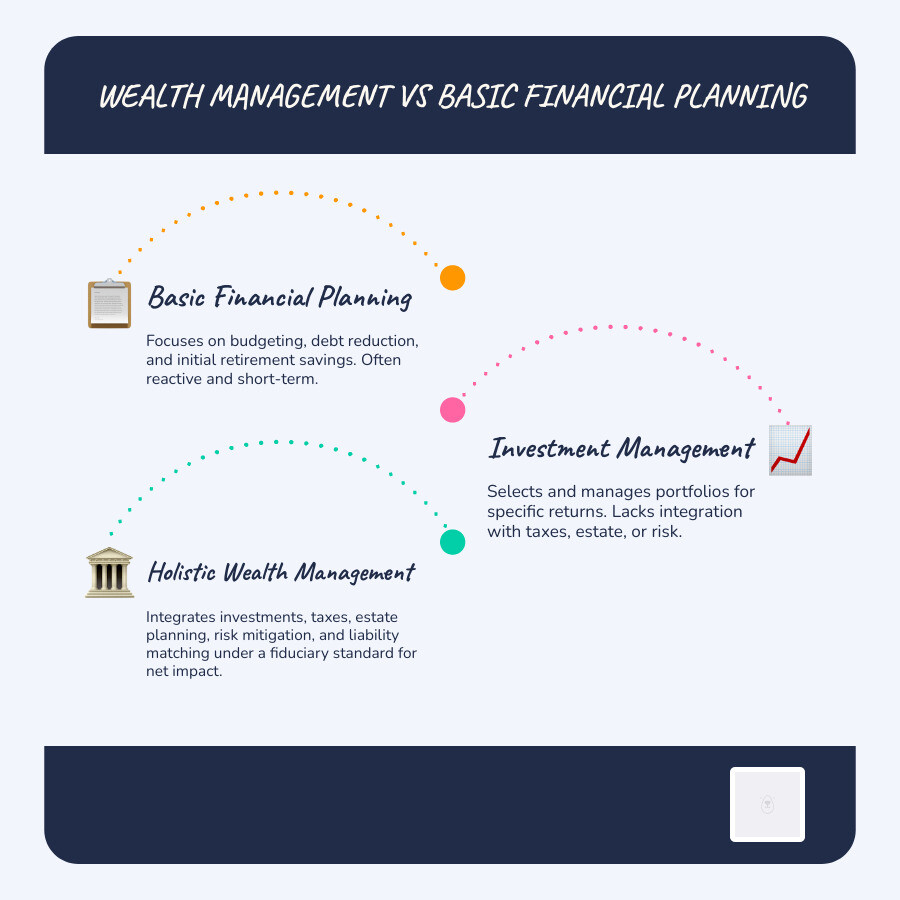
Many individuals begin their financial journey with basic financial planning or investment management. While these are crucial components, they often represent only a segment of the broader picture. Investment management, for instance, primarily focuses on selecting and managing a portfolio of assets to achieve specific returns. Basic financial planning might encompass budgeting, debt reduction, and perhaps some initial retirement savings.
Wealth management, however, is a far more expansive and holistic strategy. It synthesizes all elements of your financial ecosystem, from income and expenses to investments, taxes, estate planning, and risk mitigation. The goal is not just to grow assets, but to ensure comprehensive coordination across all domains, focusing on the net impact on your wealth after accounting for taxes, inflation, and life events. It’s about liability matching—aligning your assets to meet specific future financial obligations, whether that’s a child’s education, a comfortable retirement, or a multi-generational legacy. This integrated approach ensures that decisions made in one area don’t inadvertently undermine goals in another, providing a cohesive and optimized path forward.
The Structural Pillars: Retirement, Estate, Tax, and Risk Planning
A truly comprehensive wealth management strategy rests on several interconnected pillars:
- Retirement Planning: This goes beyond simply saving for retirement. It involves meticulously crafting an income stream creation strategy, ensuring your assets can sustain your desired lifestyle throughout your non-working years. It considers factors like Social Security optimization, pension analysis, and the strategic drawdown of various account types.
- Estate Planning: This pillar focuses on the orderly and tax-efficient transfer of your wealth across generations. It involves establishing trust structures, updating wills, and planning for philanthropic endeavors. With the 2026 federal estate tax exemption at a substantial $15 million per individual (or $30 million for married couples), strategic planning is crucial to maximize what passes to heirs and minimize tax liabilities.
- Tax Planning: Often overlooked in basic financial planning, proactive tax planning is central to wealth management. It involves strategies for tax deferral, tax reduction (e.g., through charitable giving), and managing tax exposure across all your accounts. The aim is not just compliance, but optimization to enhance your net returns.
- Risk Planning: This pillar addresses potential threats to your wealth and financial well-being. It includes risk mitigation strategies such as adequate insurance protection (life, disability, long-term care), emergency fund creation, and portfolio diversification to guard against market volatility. It’s about building resilience into your financial plan so that unforeseen events don’t derail your long-term goals.
These pillars are not independent; they are deeply intertwined. For example, estate planning decisions have significant tax implications, and retirement income strategies must account for potential healthcare costs covered by risk planning. A comprehensive wealth manager coordinates these elements into a unified, dynamic framework.
Goal-Segmented Frameworks and Life-Stage Adaptation
Effective wealth management recognizes that financial goals are deeply personal and evolve over time. It leverages insights from behavioral finance to create strategies that are not only financially sound but also emotionally resilient, prioritizing capital preservation and maintaining purchasing power through goal-based investing.
The Liquidity, Longevity, and Legacy Framework
One of the most powerful frameworks for segmenting wealth is the “Liquidity, Longevity, and Legacy” (3L) approach. This method, championed by leading financial institutions, moves beyond traditional risk tolerance questionnaires by aligning specific pools of capital with distinct time horizons and objectives.
- Liquidity Strategy: This bucket is designed to meet your short-term cash flow needs, typically covering 3 to 5 years of anticipated expenses. It holds highly liquid, low-volatility assets like cash reserves, money market funds, and short-term bonds. The primary purpose is bear market protection, ensuring you don’t have to sell growth assets at depressed prices during market downturns, thus mitigating sequence-of-returns risk. Historically, a robust liquidity strategy can add about 1% to a portfolio’s annualized return during bear markets by preventing forced selling.
- Longevity Strategy: This pool of assets is dedicated to funding your lifetime cash flow needs—your retirement, healthcare costs, and other essential long-term expenses. It typically comprises a diversified portfolio of growth-oriented assets (equities, real estate, annuities) designed to outpace inflation and provide sustainable income over decades. The goal is to ensure you don’t outlive your money.
- Legacy Strategy: This bucket holds wealth that exceeds your anticipated lifetime needs, earmarked for multi-generational transfer, philanthropic endeavors, or other long-term goals. Assets in this category can be invested more aggressively, as they have the longest time horizon and are not needed for immediate or lifetime expenses. This allows for maximizing long-term growth and tax-efficient transfer.
This segmented approach allows for a more nuanced risk management strategy. Assets in the Liquidity bucket are low-risk, while Longevity assets carry moderate risk, and Legacy assets can be high-risk, all aligned with their respective timeframes. This contrasts sharply with a single, static portfolio that might be too conservative for long-term legacy goals or too aggressive for immediate liquidity needs. Studies have shown that this approach can significantly increase ending portfolio values compared to traditional methods.
Strategy Bucket Time Horizon Primary Purpose Typical Assets Risk Profile Liquidity 3-5 Years Meet short-term expenses, bear market protection Cash, Money Markets, Short-Term Bonds, CDs Low Longevity Lifetime Fund retirement, healthcare, essential living Diversified Equities, Real Estate, Annuities Moderate Legacy Multi-Generational Maximize long-term growth, wealth transfer, philanthropy Growth Equities, Alternative Investments, Trusts High Adapting Wealth Management Strategies Across Life Stages
A dynamic wealth management strategy must adapt as individuals progress through different life stages:
- Early Career (Accumulation Phase): Focus is on wealth accumulation. Young professionals often have significant human capital—their future earning potential—which can be leveraged. Strategies emphasize aggressive growth, maximizing contributions to tax-advantaged accounts (401(k)s, IRAs), and building a strong foundation of financial literacy.
- Mid-Career (Growth and Family Phase): This stage often involves balancing competing goals: raising a family, paying down debt, saving for children’s education, and continuing retirement contributions. Strategies here become more complex, requiring careful prioritization and risk management.
- Near-Retirement (Transition Phase): As individuals approach retirement, the focus shifts from pure accumulation to capital preservation and income generation. Managing sequence-of-returns risk becomes paramount. This is where the Liquidity bucket is fully funded, and portfolios are adjusted to provide a stable income stream while still allowing for growth.
- Retirement (Distribution Phase): The primary goal is to sustainably distribute wealth to fund living expenses. This involves tax-efficient withdrawal strategies from various accounts (taxable, tax-deferred, tax-exempt Roth), managing Required Minimum Distributions (RMDs), and ensuring the longevity of the portfolio.
Traditional “glide paths” often suggest a steady reduction in equity exposure with age. However, a purpose-based framework allows for a more nuanced approach, potentially maintaining higher growth allocations in Legacy assets even in retirement, as those funds are not needed for immediate living expenses.
Core Habits for Executing Wealth Management Strategies
While sophisticated strategies are essential, their effectiveness hinges on fundamental habits. Those who consider themselves wealthy often attribute their success to these core practices:

- Starting Early: The power of compounding is undeniable. Starting to save and invest early allows even small contributions to grow substantially over time. A significant 37% of self-identified wealthy Americans cite saving from a young age as essential. This also includes fostering financial literacy early, even within families, to ensure future generations are equipped to manage wealth.
- Saving Consistently: Regular, disciplined saving is the bedrock of wealth creation. This means consistently allocating a portion of every paycheck and strategically distributing unexpected windfalls (bonuses, tax refunds) into investment accounts. 32% of wealthy Americans credited consistent paycheck savings for their financial comfort.
- Investing Strategically: This involves aligning investments with clear goals and a well-defined risk tolerance. It’s not about chasing hot stocks but building a diversified portfolio that supports your long-term objectives. 40% attributed their success to investing strategically. A well-crafted plan provides confidence: 78% of people with a financial plan feel confident in their wealth-building efforts, compared to only 26% without one.
These habits, combined with a clear understanding of your purpose-based goals, create a powerful engine for wealth accumulation and preservation.
Tax Integration, Asset Diversification, and Business Growth
Maximizing net returns requires more than just investment performance; it demands proactive tax minimization and strategic asset location. Furthermore, a holistic wealth strategy often extends to integrating business growth with personal financial goals, leveraging non-correlated assets for robust diversification.
Enhancing Tax Efficiency Across Multiple Account Types
Tax efficiency is a cornerstone of wealth management, ensuring that more of your investment gains remain in your pocket. This involves strategically utilizing different account types:
- Taxable Accounts: These are standard brokerage accounts where investments grow and are taxed annually on dividends and realized capital gains. Strategies here include tax-loss harvesting (selling losing investments to offset gains), managing the timing of sales, and charitable giving to reduce taxable income.
- Tax-Deferred Accounts: These include 401(k)s, Traditional IRAs, and Health Savings Accounts (HSAs). Contributions are often tax-deductible, and investments grow tax-free until withdrawal in retirement. For 2026, the 401(k) employee contribution limit is $24,500, with an additional $11,250 catch-up contribution for those aged 60-63. HSAs are particularly powerful, offering a “triple tax advantage”: tax-deductible contributions, tax-free growth, and tax-free withdrawals for qualified medical expenses.
- Tax-Exempt Roth Accounts: Roth IRAs and Roth 401(k)s are funded with after-tax dollars, but qualified withdrawals in retirement are entirely tax-free. This provides invaluable flexibility, especially for managing future tax liabilities.
A sophisticated wealth manager will implement a strategy known as “asset location,” placing different types of investments (e.g., highly taxed bonds in tax-deferred accounts, growth stocks in Roth accounts) in the most tax-efficient accounts to maximize after-tax returns.
Alternative Assets and Portfolio Diversification
Diversification is crucial for market resilience, especially in today’s volatile economic climate. While traditional portfolios often focus on stocks and bonds, alternative assets play a vital role in spreading risk and hedging against inflation.
Physical assets, such as precious metals, are particularly valuable because they are often non-correlated with traditional paper assets like stocks and bonds. This means they tend to perform differently during market downturns, providing a buffer to the overall portfolio. Gold, for instance, is often considered a safe-haven asset, while silver has dual appeal as both a monetary metal and an industrial commodity (with industrial applications accounting for approximately 55% of global silver demand). Including these in a portfolio can provide inflation hedging and capital preservation. For those looking to integrate these assets into their retirement planning, exploring options like precious metals IRAs can be a strategic move to diversify and protect long-term savings.
Integrating Business Growth and Enterprise Value
For entrepreneurs and business owners, personal wealth management is inextricably linked to their business. A comprehensive strategy considers:
- Business Succession Planning: Whether planning for a sale, transfer to family, or management buyout, a clear succession plan is vital for maximizing enterprise value and ensuring a smooth transition.
- Key Employee Benefits: Attracting and retaining top talent through executive benefits and compensation plans can significantly impact business growth and, by extension, the owner’s personal wealth.
- Corporate Tax Planning: Integrating corporate tax strategies with personal financial goals can lead to substantial overall tax efficiencies, affecting everything from distributions to liquidity events.
- Liquidity Events: Planning for major business liquidity events (e.g., sale of the company) involves sophisticated tax planning, investment of proceeds, and alignment with long-term legacy goals.
Aligning business and personal financial goals is crucial for maximizing overall wealth. Many business leaders find immense value in strategic business consulting to optimize their operations, enhance profitability, and prepare for future growth or transition. This integrated approach ensures that the business serves as a powerful engine for personal wealth accumulation and preservation.
Behavioral Risk, Fiduciary Guidance, and Wealthtech Innovation
Even the most meticulously crafted financial plans can be derailed by human behavior or lack of appropriate guidance. Understanding investor psychology, embracing fiduciary relationships, and leveraging cutting-edge wealthtech are critical for sustained success.
Overcoming Emotional Biases with Fiduciary Governance
Investor psychology plays a significant role in financial outcomes. Common behavioral biases like loss aversion (the tendency to prefer avoiding losses over acquiring equivalent gains) and mental accounting (treating money differently based on its source or intended use) can lead to irrational decisions, especially during market volatility.
This is where the role of a financial advisor, particularly one operating under a fiduciary standard, becomes invaluable. Unlike advisors who operate under a “suitability standard” (which only requires recommendations to be suitable for the client), a fiduciary is legally and ethically bound to act solely in the client’s best interest. This obligation helps eliminate conflicts of interest, ensuring that advice is objective and tailored to your specific goals, rather than driven by commissions or product sales. A fiduciary provides a vital behavioral guardrail, helping clients avoid panic selling during downturns or chasing speculative trends, thus fostering calm confidence and alignment with long-term objectives.
Managing Sequence-of-Returns Risk and Market Downturns
For retirees and near-retirees, managing sequence-of-returns risk is paramount. This risk refers to the danger that poor investment returns early in retirement, combined with withdrawals, can prematurely deplete a portfolio. A significant market downturn during the initial years of distribution can have a devastating and irreversible impact.
Strategies to mitigate this include:
- Liquidity Buckets: As discussed, maintaining 3 to 5 years of living expenses in low-risk, highly liquid assets ensures that you don’t have to sell equities during a bear market.
- Bond Laddering: Structuring fixed-income investments with staggered maturities can provide predictable income and flexibility.
- Defensive Equities: Allocating a portion of the portfolio to defensive sectors like consumer staples and healthcare, which tend to be more resilient during economic slowdowns, can provide dividend sustainability and relative stability.
- Flexible Spending: Having the ability to reduce discretionary spending during market downturns can also extend portfolio longevity.
By proactively addressing drawdown risk and distribution timing, retirees can protect their portfolios and enhance the probability of achieving their long-term financial goals.
Modernizing Engagement Through Wealthtech
The “Great Wealth Transfer” means that younger generations—Millennials and Gen Z—are increasingly becoming key players in wealth management. These generations, often digital natives, expect seamless, technology-driven engagement.

Wealthtech (financial technology) is transforming how wealth management is delivered. Digital tools, real-time analytics, and AI financial tools are becoming essential for engaging this demographic. For example, 79% of younger affluent millennials regularly review their net worth, making consolidated, real-time financial dashboards a baseline expectation. With 70% of global retail investors now under the age of 45, advisors must digitize their solution sets to remain relevant. Technology acts as a bridge to deeper personal engagement, providing transparency, accessibility, and personalized insights that resonate with tech-savvy clients. Furthermore, connecting with like-minded individuals and industry leaders can be a powerful catalyst for financial growth and learning. Many find significant value in participating in exclusive networking events that foster collaboration and knowledge sharing within the financial community.
Frequently Asked Questions about Wealth Management Strategies
How does wealth management differ from standard investment management?
Wealth management offers a broader service scope than standard investment management. While investment management focuses primarily on portfolio construction and performance, wealth management encompasses a comprehensive planning approach. This includes tax integration, estate planning, risk management, and often business succession, all governed by a fiduciary obligation to act in the client’s best interest. It aims for a holistic net impact on your entire financial life, not just investment returns.
What is sequence-of-returns risk and how can retirees mitigate it?
Sequence-of-returns risk is the danger that poor investment returns early in retirement, combined with portfolio withdrawals, can significantly reduce the longevity of a portfolio. Retirees can mitigate this by establishing a dedicated liquidity bucket (e.g., 3-5 years of living expenses in cash or short-term bonds) to avoid forced liquidations of growth assets during bear markets. Other strategies include bond laddering, investing in defensive equities for dividend sustainability, and maintaining flexibility in spending.
How does tax integration improve net investment returns?
Tax integration significantly improves net investment returns by focusing on after-tax growth rather than just gross returns. This involves strategic asset location (placing tax-inefficient assets in tax-advantaged accounts), utilizing tax-loss harvesting to offset capital gains, and managing withdrawals across different account types (taxable, tax-deferred, tax-exempt) to stay within optimal tax brackets. Proactive tax planning ensures that a greater portion of your investment gains contributes to your actual wealth.
Conclusion
Navigating the complexities of wealth creation and preservation in 2026 demands a sophisticated, holistic approach. True wealth management transcends basic financial planning, offering a comprehensive framework that integrates retirement, estate, tax, and risk planning into a cohesive strategy. By segmenting wealth by purpose (Liquidity, Longevity, Legacy), adapting strategies across life stages, and embracing core habits of early, consistent, and strategic engagement, individuals can build profound financial confidence.
Moreover, leveraging tax integration, diversifying with non-correlated assets, and aligning personal wealth with business growth are critical for maximizing net impact. In an era shaped by behavioral biases and rapid technological advancement, the guidance of a fiduciary advisor and the innovation of wealthtech are indispensable. By embracing this strategic evolution, we can ensure long-term durability and effective wealth preservation for generations to come.
