Scientifically Supported Health Benefits of CBD and Cannabinoids

The digital marketplace has significantly transformed how we access wellness solutions. Among these, cannabis supplements online have seen a remarkable rise in popularity. As more people seek natural alternatives, understanding the true potential of compounds like CBD becomes essential.
We recognize the growing interest in these products. However, we also know that navigating the vast array of options can be confusing. It’s crucial to distinguish between effective, high-quality supplements and those that may not meet safety or purity standards.
In this extensive guide, we aim to provide clarity. We will explore the scientifically supported health benefits of various cannabinoids. We will also help you understand the legal landscape and guide you on selecting high-quality products. Our goal is to empower you to make informed decisions when exploring legal cannabis products for your wellness journey.

The burgeoning field of cannabinoid research continues to uncover the therapeutic potential of compounds derived from the cannabis plant, particularly cannabidiol (CBD). Unlike its well-known counterpart, tetrahydrocannabinol (THC), CBD is non-intoxicating, meaning it does not produce the “high” associated with marijuana. This distinction has propelled CBD into the wellness spotlight, with numerous clinical studies exploring its interactions with our body’s endocannabinoid system (ECS) to support various aspects of health. The ECS plays a crucial role in regulating a wide range of physiological and cognitive processes, including mood, pain sensation, appetite, and memory. By influencing this intricate system, cannabinoids offer a promising avenue for wellness support.

Managing Chronic Pain and Inflammation
One of the most widely recognized and researched benefits of CBD is its potential in managing chronic pain and inflammation. Preclinical studies, including those focused on arthritis, suggest that CBD may possess significant analgesic properties. It appears to interact with pain receptors and reduce inflammatory responses by modulating inflammatory cytokines, which are signaling molecules involved in inflammation. For individuals experiencing conditions like neuropathic pain or the discomfort of arthritis, topical CBD creams can offer localized relief, while ingestible forms may help address systemic inflammation. While extensive human clinical trials are still underway to fully quantify its efficacy, the existing evidence is compelling enough for many to incorporate CBD into their pain management strategies.
Sleep Architecture and Anxiety Reduction
The impact of CBD on sleep quality and anxiety is another area generating considerable interest. Many individuals report using CBD to improve sleep onset and achieve more restful sleep. A notable 2024 study highlighted that a modest dose of 15 mg of CBD was found to be as effective as 5 mg of melatonin in improving sleep quality. This suggests CBD’s potential to help quiet racing thoughts and promote relaxation, which are often barriers to falling asleep. Beyond sleep, CBD has shown promise in reducing anxiety symptoms. For instance, taking sublingual CBD tincture prior to public speaking has been cited as a real-world use case for alleviating acute social anxiety. Furthermore, research indicates potential cardiovascular benefits; a 2020 study involving 26 healthy men demonstrated that treatment with 600 milligrams of CBD for seven days led to significant short-term reductions in blood pressure compared with a placebo group. These findings suggest CBD’s role in cortisol regulation and overall stress response, contributing to both mental well-being and potentially heart health.
Neuroprotective Properties and Clinical Applications
Perhaps the most significant clinical validation for a cannabinoid comes from the pharmaceutical realm. The U.S. Food and Drug Administration (FDA) has approved one CBD product, Epidiolex, for the treatment of several severe seizure disorders, including Dravet syndrome and Lennox-Gastaut syndrome, as well as seizures associated with tuberous sclerosis complex (TSC). This approval underscores CBD’s established efficacy in specific neurological conditions and highlights its neuroprotective properties. While Epidiolex is a prescription medication, its success has spurred further research into CBD’s broader neuroprotective potential, investigating its role in other neurological disorders and brain health. This FDA-approved application sets a high bar for the therapeutic promise of cannabinoids.
Navigating the Framework of Legal Cannabinoid Products

Understanding the legal landscape surrounding cannabis supplements online is paramount for consumers. The regulatory environment has evolved significantly, particularly in the United States, shaping how these products are cultivated, processed, and sold. The cornerstone of current federal legality rests on the 2018 Farm Bill, which fundamentally reshaped the agricultural and legal status of hemp and its derivatives.
Hemp-Derived vs. Marijuana-Derived Distinctions
A critical distinction in cannabinoids is between hemp-derived and marijuana-derived products. Both hemp and marijuana are varieties of the cannabis plant, but their legal and psychoactive properties differ significantly due to their Delta-9 THC content. The 2018 Farm Bill legally defined hemp as cannabis plants containing less than 0.3% Delta-9 THC on a dry weight basis. Products derived from such hemp, including CBD, were consequently removed from the Controlled Substances Act, making them federally legal across the United States. This means that hemp-derived CBD products can be purchased online and shipped across state lines without a medical marijuana license in most states.
In contrast, marijuana, by federal definition, refers to cannabis plants with a Delta-9 THC concentration exceeding 0.3%. These products remain federally illegal and are subject to state-specific medical or recreational cannabis laws. Therefore, when we discuss cannabis supplements online, we are primarily referring to those derived from hemp, adhering to the federal 0.3% THC limit. This legislative clarity has opened the door for a thriving industry of hemp-derived cannabinoid products, making it easier for consumers to access a wide array of wellness options. To ensure you’re always sourcing high-quality legal cannabis products, it’s wise to consult reliable sources that prioritize transparency and adherence to these federal guidelines.
Academic and Industry Advancements in Cannabinoid Science
The expansion of the legal hemp industry has not only broadened consumer access but has also fueled significant advancements in academic research and industry development. Educational institutions are increasingly recognizing the need for specialized knowledge in this rapidly growing sector. For instance, the University of Mississippi offers an online Master of Science in Dietary Supplements and Medical Cannabis. This 30-credit-hour program, designed to be completed over two years, focuses on the science, regulation, and quality control aspects of natural products and medical cannabis. With a tuition rate of $675 per credit hour for the Fall/Spring 2025–2026 academic year, it represents a significant investment in professional development within these fields.
Such programs are vital for training experts in regulatory affairs, quality assurance, and product design, ensuring that as the industry matures, it does so with a strong foundation in scientific rigor and consumer safety. The growth of these academic pathways underscores the industry’s commitment to advancing our understanding of cannabinoids and developing safe, effective dietary supplements.
Evaluating Delivery Formats and Bioavailability
When selecting cannabis supplements online, understanding the various delivery formats and their impact on bioavailability, onset time, and duration of effects is crucial. Bioavailability refers to the proportion of a drug or other substance that enters the circulation when introduced into the body and is able to have an active effect. Different consumption methods lead to varying absorption speeds and metabolic pathways, ultimately influencing how quickly and effectively cannabinoids interact with your body’s systems.
Comparing Onset and Duration Across Legal Cannabinoid Products
The choice of delivery method significantly dictates the user experience.
- Sublingual tinctures (oils dropped under the tongue) offer a relatively fast onset, typically within 15-60 minutes, as cannabinoids are absorbed directly into the bloodstream through the mucous membranes. The effects can last for 4-6 hours.
- Oral edibles (gummies, capsules, baked goods) must pass through the digestive system and liver before entering the bloodstream. This metabolic pathway results in a slower onset, usually 1-2 hours, but often leads to a longer-lasting effect, sometimes up to 6-8 hours.
- Topical creams and balms are applied directly to the skin and are primarily absorbed by local cannabinoid receptors, providing localized relief without entering the bloodstream in significant amounts. Effects can be felt within minutes to an hour and last for several hours, targeting specific areas of discomfort.
- Inhalation methods (vaping) offer the fastest onset, often within minutes, as cannabinoids enter the lungs and are quickly absorbed into the bloodstream. However, these effects typically have the shortest duration, lasting 2-4 hours.
We can visualize these differences to better understand how each method suits different needs:
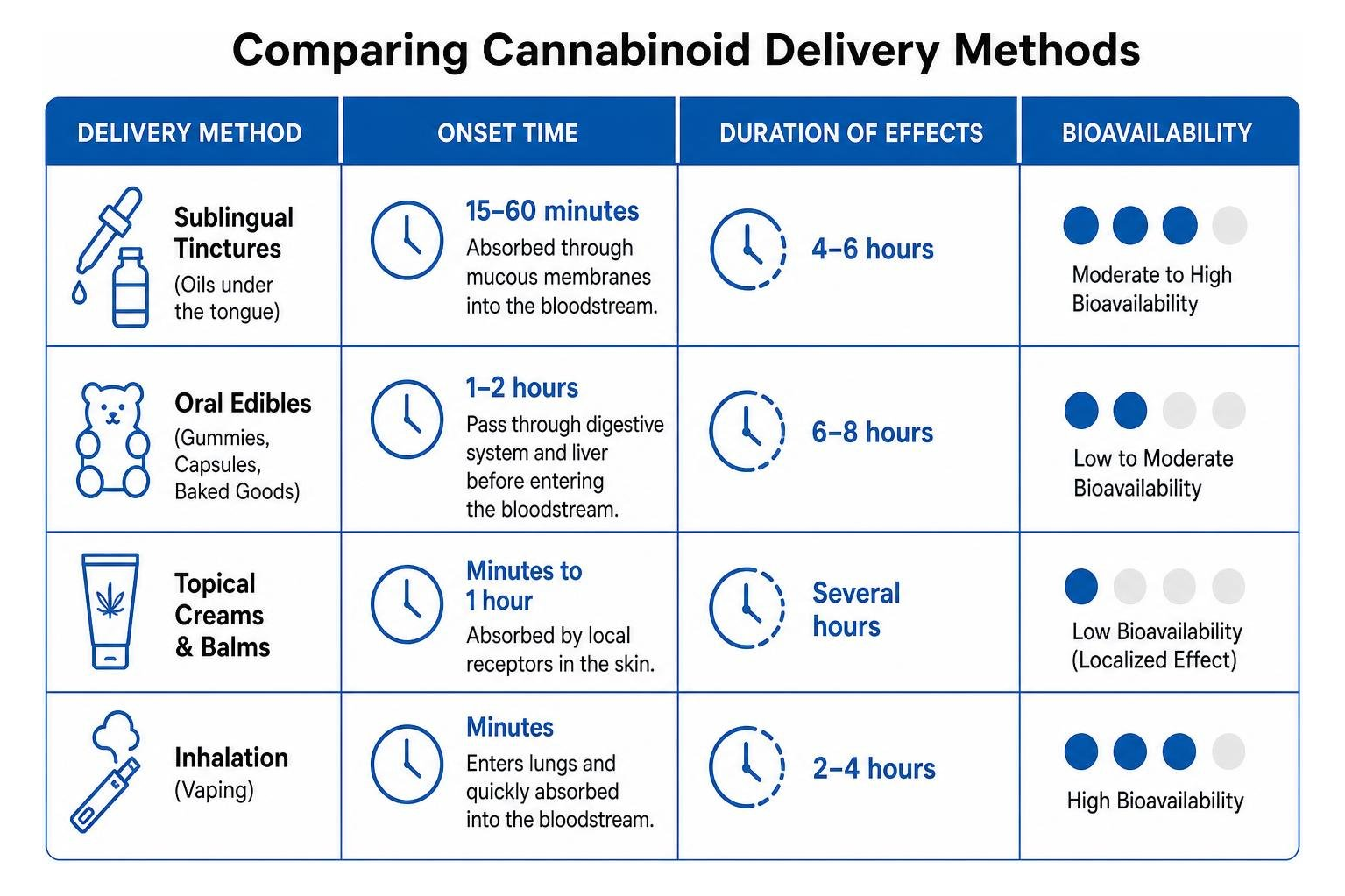
Choosing the right format depends on your desired onset time, the duration of relief needed, and whether you require systemic or localized effects. For instance, sublingual tinctures are excellent for faster action, while edibles might be preferred for sustained effects throughout the day or night.
Standards for Identifying High-Purity Legal Cannabinoid Products
Given the unregulated nature of many cannabis supplements online, ensuring product quality, purity, and accurate labeling is paramount. The most reliable indicator of a reputable product is the availability of a Certificate of Analysis (COA) from an independent, third-party testing laboratory. This document provides a transparent breakdown of the product’s cannabinoid potency, verifying the levels of CBD, THC, and other minor cannabinoids. It also confirms the absence of harmful contaminants.
When evaluating a COA, we look for several key checkpoints:
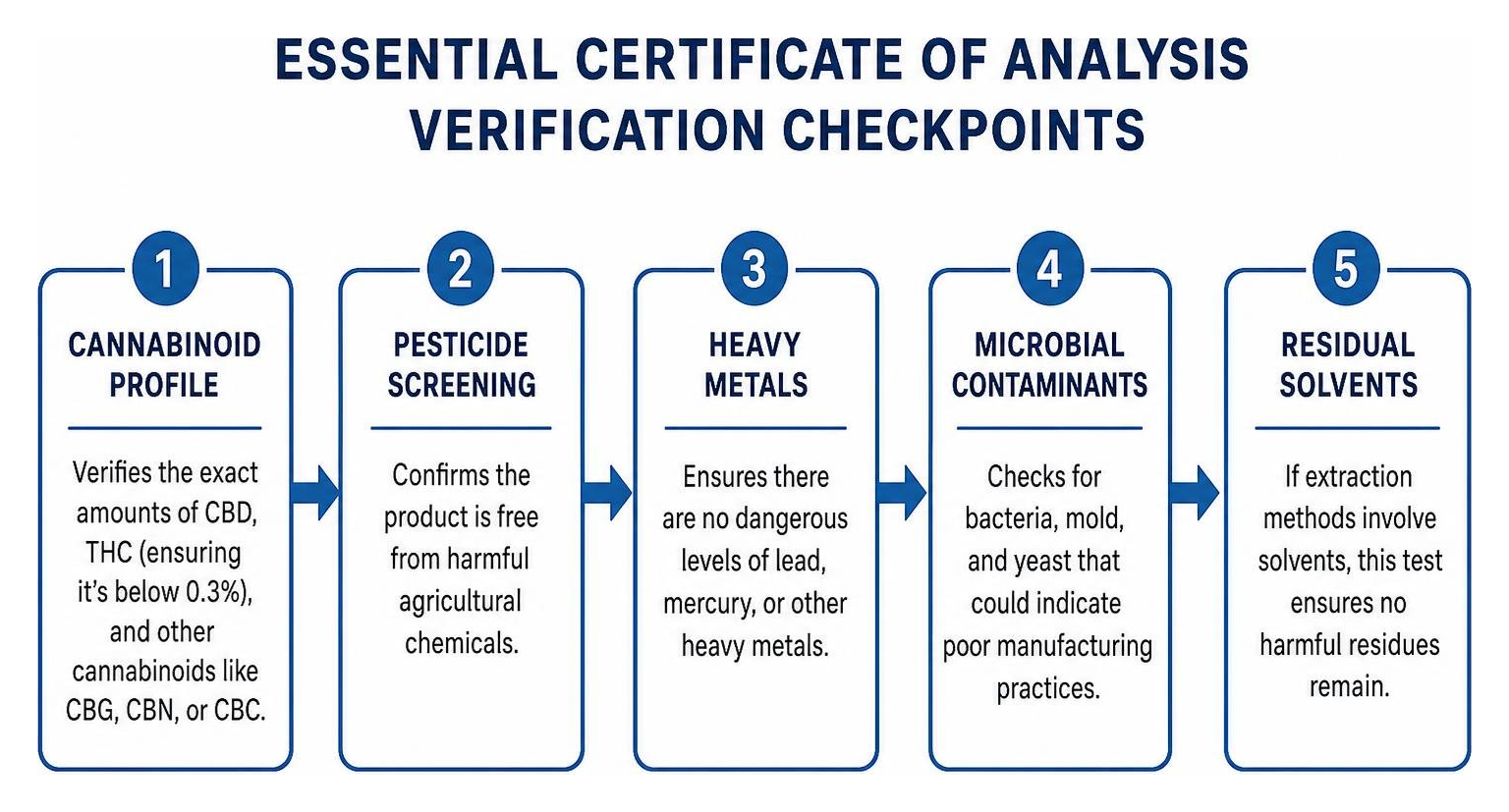
- Cannabinoid Profile: Verifies the exact amounts of CBD, THC (ensuring it’s below 0.3%), and other cannabinoids like CBG, CBN, or CBC.
- Pesticide Screening: Confirms the product is free from harmful agricultural chemicals.
- Heavy Metals: Ensures there are no dangerous levels of lead, mercury, or other heavy metals.
- Microbial Contaminants: Checks for bacteria, mold, and yeast that could indicate poor manufacturing practices.
- Residual Solvents: If extraction methods involve solvents, this test ensures no harmful residues remain.
- Terpene Profile (Optional but Recommended): Identifies the aromatic compounds that contribute to the “entourage effect” and flavor.
Always verify that the COA is recent and corresponds to the batch number of the product you are purchasing. This diligence helps us ensure that the cannabis supplements we choose are safe, accurately labeled, and of the highest quality.
Cannabinoid Safety Profile, Side Effects, and Drug Interactions
While CBD is generally considered well-tolerated, it is not without potential side effects, and understanding these is crucial for safe use. Common adverse effects reported include fatigue, changes in appetite, and digestive issues such as diarrhea. These are typically mild, but it’s important to be aware of them. The World Health Organization has noted that “In humans, CBD exhibits no effects indicative of any abuse or dependence potential,” and a study in Neuropsychopharmacology concluded that “acute CBD alone is unlikely to significantly impair daily functioning or workplace performance.” Despite this generally favorable safety profile, we always recommend consulting a healthcare professional before incorporating cannabis supplements into your routine, especially if you have underlying health conditions or are taking other medications.
Cytochrome P450 Metabolism and Medication Precautions
One of the most significant safety considerations for CBD use involves its interaction with the body’s cytochrome P450 (CYP450) enzyme system in the liver. This system is responsible for metabolizing a vast array of medications. CBD can inhibit certain CYP450 enzymes, much like grapefruit juice does, which can alter how your body processes other drugs. This “grapefruit effect” can lead to higher-than-intended levels of certain medications in your bloodstream, potentially increasing their side effects or toxicity.
For example, CBD can interact with blood thinners (like warfarin), anti-epileptics (like clobazam), immunosuppressants, antidepressants, and other medications. In some cases, severe side effects observed in childhood epilepsy trials, such as pneumonia or abnormal liver function, were attributed to drug interactions between CBD and pharmaceutical drugs like clobazam, rather than CBD alone. Therefore, it is imperative to discuss your CBD use with a qualified healthcare professional. They can assess potential drug interactions, monitor liver enzymes if necessary, and help you determine a safe and appropriate dosage, or advise against use if risks outweigh benefits. This proactive approach ensures that we prioritize our health and safety when exploring cannabis supplements online.
Frequently Asked Questions About Cannabinoid Supplements
As interest in cannabis supplements grows, so do the questions surrounding their use. Here, we address some of the most common inquiries to help you navigate your wellness journey with confidence.
How long does it take for cannabinoid supplements to take effect?
The onset time for cannabinoid supplements varies significantly depending on the delivery method.
- Sublingual absorption (tinctures held under the tongue) typically leads to effects within 15 to 60 minutes, as the compounds are absorbed directly into the bloodstream.
- Oral ingestion (gummies, capsules) requires the cannabinoids to pass through the digestive system and liver, resulting in a slower onset of 1 to 2 hours. However, these methods often provide a longer-lasting effect.
- Topical applications (creams, balms) can produce localized effects within minutes to an hour, as they interact with cannabinoid receptors in the skin.
- Inhalation (vaping) offers the fastest onset, often within minutes, but the effects are generally shorter-lived.
The peak concentration and overall duration of effects will also differ based on these methods, allowing you to choose the best option for your specific needs.
What is the difference between full-spectrum, broad-spectrum, and isolate formulations?
Understanding the different formulations of CBD products is key to selecting the right supplement for you:
- CBD Isolate: This is the purest form of CBD, containing 99% pure cannabidiol with all other cannabis plant compounds, including THC, removed. It’s ideal for individuals who want to avoid THC entirely or who are sensitive to other cannabinoids.
- Broad-Spectrum CBD: This formulation contains CBD along with other naturally occurring compounds from the cannabis plant, such as terpenes, flavonoids, and minor cannabinoids (e.g., CBG, CBN, CBC), but with the THC completely removed or reduced to undetectable levels. It offers the potential for an “entourage effect” (where compounds work synergistically) without the psychoactive component of THC.
- Full-Spectrum CBD: This type of product contains the full range of cannabinoids, terpenes, and flavonoids naturally found in the hemp plant, including trace amounts of THC (up to 0.3% by dry weight, as legally permitted). Many believe that the presence of all these compounds working together enhances the therapeutic benefits through the “entourage effect,” making it potentially more effective than isolates.
Your choice among these depends on your personal preferences, sensitivity to THC, and desired therapeutic outcomes.
Can daily use of CBD lead to tolerance or adverse drug interactions?
Daily use of CBD can lead to sustained efficacy for many users, meaning consistent benefits over time. However, some individuals may experience a gradual development of tolerance, potentially requiring higher serving sizes to achieve the same effects. This is a common phenomenon with many supplements and medications.
Regarding drug interactions, as we’ve discussed, CBD can interact with certain medications by inhibiting the CYP450 enzyme system in the liver. This can affect how your body metabolizes prescription drugs, potentially leading to increased drug levels and side effects. It’s crucial to inform your healthcare provider about any CBD use, especially if you are taking blood thinners, anti-epileptics, immunosuppressants, or other medications that are metabolized by the liver. They can help you assess the risk of interactions and adjust dosages if necessary. Prioritizing consultation with a healthcare professional is an actionable step to ensure your safety when considering daily CBD use alongside other medications.
Conclusion
The world of cannabis supplements online offers a promising frontier for wellness, driven by increasing scientific understanding and evolving legal frameworks. From managing chronic pain and anxiety to supporting sleep and neurological health, the evidence-based benefits of cannabinoids, particularly CBD, are becoming increasingly clear.
However, navigating this landscape requires diligence and informed decision-making. We emphasize the critical importance of understanding the distinctions between hemp-derived and marijuana-derived products, adhering to federal regulations, and prioritizing product quality through third-party lab verification. By carefully evaluating delivery formats, understanding potential side effects, and always consulting with a healthcare professional regarding drug interactions, we can safely and effectively integrate these supplements into our holistic health strategies. As research continues to unfold, we remain committed to providing the most current and accurate information to empower your journey toward well-being.
