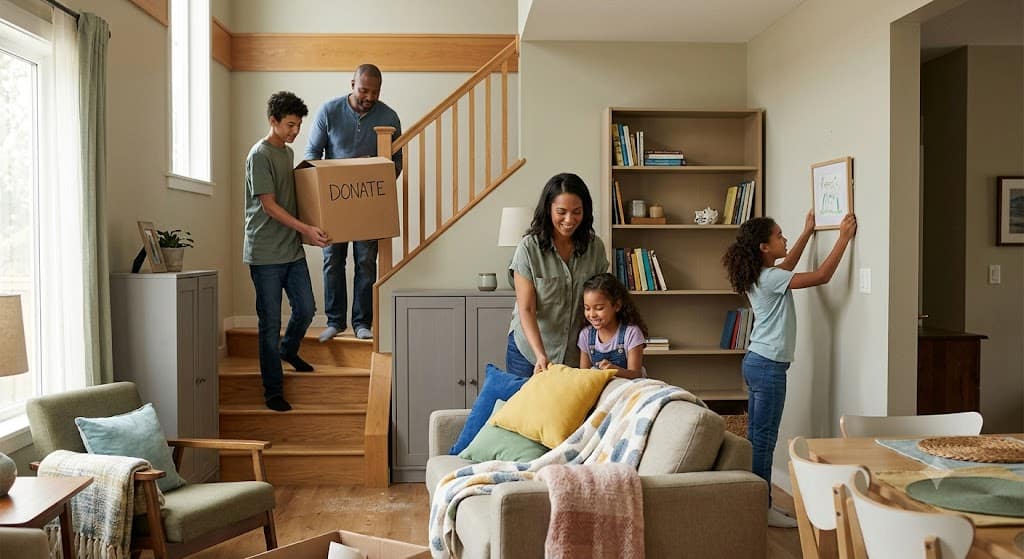
Family homes need to adapt every time the people living in them change. A new baby, a partner moving in, a grown child returning, or a foster child arriving each change what the same four walls need to provide. Getting the physical space right does more than tidy up logistics. It signals the household is here to stay, and that everyone has a proper place.
This matters just as much when a household grows through fostering as with any other family change. A social worker will ask about bedrooms and safety before a placement begins, but the emotional groundwork matters just as much as the checklist. Shaping a home room by room helps a new arrival feel like they have landed somewhere solid, not borrowed.
Give Everyone Living There Their Own Space
Even one shelf or small room that belongs to just one person can change how quickly someone settles in, especially a child who has moved before. Moving house is regularly ranked alongside bereavement and divorce as one of life’s most demanding experiences, even when the move is a good one. Letting a person choose what goes on their own wall turns an unfamiliar house into somewhere they have control over, mattering most for a child who had little say in bigger decisions.
Preparing a Home for a Foster Child
A bedroom thought through in advance, with age-appropriate furniture and enough storage for the child’s belongings, helps a placement settle faster than one finished in a hurry. Long term fostering is built around that kind of permanence, with placements expected to last the rest of a child’s childhood, so the bedroom is usually decorated as the child’s own space from the start, not kept neutral in case of an early ending.
Clear Out What No Longer Fits Who Lives There Now
A fresh start rarely works if the house is still full of things from an earlier stage of family life. Boxes from a previous house, clothes a grown child left behind, or an older sibling’s old toys take up space a new arrival could use. Clearing this out helps everyone already there, since clutter has been linked to poorer focus and increased stress by researchers studying living spaces. Working through one room at a time works better than a frantic clear out.
Small Routines That Help Everyone Adjust
Ordinary daily habits do more to settle a household than any single piece of furniture. A regular mealtime, a bedtime close to the same time each night, and a predictable morning before school give a child something to hold onto while everything else is new. These routines do not need to be elaborate. What matters is that they repeat often enough for a child to trust they will happen again.
Give the Change Time to Settle
A home rarely feels finished the week someone moves in, and treating it as a slow process takes pressure off everyone. Small adjustments, made over weeks rather than days, stick better than trying to get everything right at once. Whether the change is a new baby, a returning adult child or a foster placement built to last, the same principle applies. A house feels like home once its people have had time to shape it around themselves.
