Strategic Real Estate Technology and App Development
 The real estate world is changing quickly. Digital tools and mobile apps are leading this shift. For businesses to stay competitive, custom technology solutions are now essential.
The property technology (PropTech) market is seeing huge growth. The global real estate app market reached $10.24 billion in 2022. Experts predict it will grow by 12.8% each year until 2030. This shows how important technology has become in real estate.
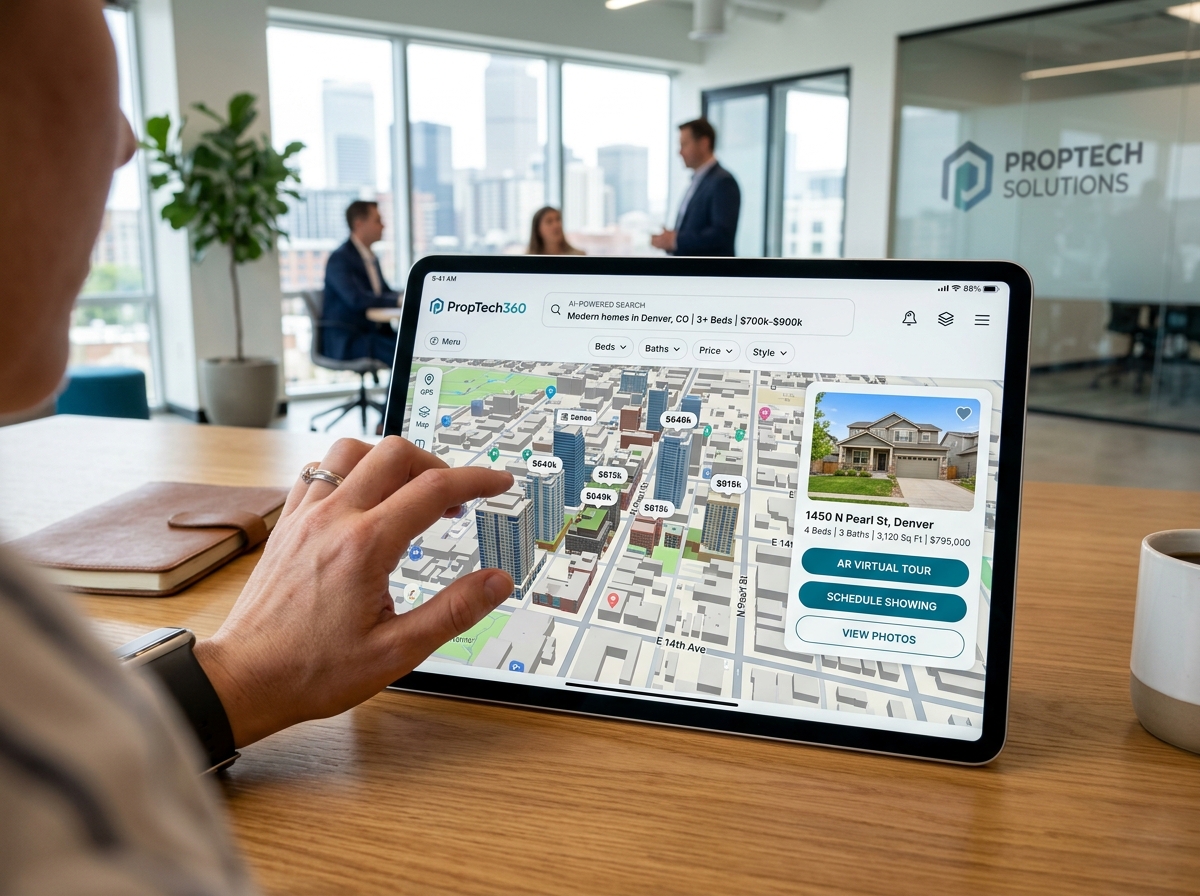
This guide will explain real estate technology and app development. We will explore what makes a real estate app successful. We will look at advanced technologies like AI, AR, and VR. We will also detail the steps to build a powerful app. Understanding this complex area is vital for any modern real estate technology platform. We will discuss costs, how to make money from apps, and how they benefit everyone involved.
Our goal is to give you the insights needed to innovate. This will help your business thrive in today’s fast-moving property market.
The digital transformation in real estate is not just about convenience; it’s a strategic imperative. Custom technology solutions offer a unique opportunity to streamline operations, enhance user experiences, and unlock new revenue streams. By investing in tailored applications, businesses can address specific market needs and gain a competitive edge.

These innovations benefit various stakeholders across the real estate ecosystem. Buyers and renters gain access to more personalized searches, virtual tours, and simplified application processes. Sellers and landlords can leverage advanced marketing tools, automated lead management, and efficient communication channels. Agents and brokers find themselves equipped with powerful CRM systems, data analytics, and tools for managing listings and client relationships more effectively. Enterprises, ranging from property management firms to investment groups, can optimize their portfolios, automate complex workflows, and gain deeper market insights. The market opportunities are vast, extending from hyper-local niche applications to broad, scalable platforms.
When considering development, a fundamental choice arises between native and cross-platform approaches. Each has its merits depending on the project’s scope, budget, and desired performance.
Feature Native Development (iOS/Android) Cross-Platform Development (e.g., Flutter, React Native) Performance Optimal, leveraging device-specific features fully Near-native, generally high performance User Experience Seamless, adheres to platform UI guidelines Consistent across platforms, can be customized Development Time Longer, separate codebases for each platform Shorter, single codebase for multiple platforms Cost Higher, due to specialized development for each OS Lower, more efficient use of resources Access to Device Full access to hardware features and APIs Good access, sometimes requires native modules Maintenance Separate updates for each platform Unified updates, easier to manage Scalability Highly scalable for complex, high-performance apps Good scalability, suitable for most business needs Custom IT solutions allow for precise control over features, branding, and integration with existing systems, ensuring that the technology truly serves the business’s unique objectives.
Essential Features for Modern Real Estate App Development
To truly stand out and engage users, a real estate app must go beyond basic listings. Modern applications integrate a suite of features designed to provide value, convenience, and an immersive experience.
At the core, robust MLS (Multiple Listing Service) integration and IDX (Internet Data Exchange) tools are non-negotiable for property listing apps in many regions. These integrations provide access to comprehensive and up-to-date property data, ensuring users have the most accurate information at their fingertips. Without seamless MLS integration, an app risks offering incomplete or outdated listings, severely limiting its utility.
Beyond raw data, AI recommendations are transforming how users discover properties. Leveraging machine learning, apps can analyze user behavior, preferences, and search history to suggest properties that align perfectly with their needs, often uncovering options they might not have found otherwise. This personalization significantly enhances the user experience.
Immersive experiences are also key. AR/VR tours allow prospective buyers to virtually walk through properties from anywhere in the world, saving time and providing a detailed understanding of the space. This technology can even enable users to visualize furniture placement or renovation possibilities within a virtual environment. Many advanced applications, such as those developed by Synergy Labs real estate apps, prioritize these interactive features to create a truly engaging platform.
Other crucial features include:
- Curated reviews of agents: Building trust and transparency by allowing users to rate and review real estate professionals.
- Neighborhood insights: Providing detailed information about local amenities, crime rates, public transport, and community demographics.
- School districts information: A critical factor for many families, offering data on local schools, ratings, and attendance zones.
- Advanced search filters: Enabling highly specific searches based on property type, price, size, number of rooms, specific features (e.g., swimming pool, smart home tech), and more.
- Map integration: Interactive maps that display property locations, nearby points of interest, and even commute times.
- Push notifications: Real-time alerts for new listings, price changes, or messages, ensuring users never miss an opportunity.
- In-app chat and communication tools: Facilitating direct and secure communication between buyers, sellers, and agents.
- Mortgage calculators and financial tools: Helping users estimate affordability and understand potential loan options.
- User profiles and saved searches: Allowing users to save their favorite properties, track their search history, and receive personalized updates.
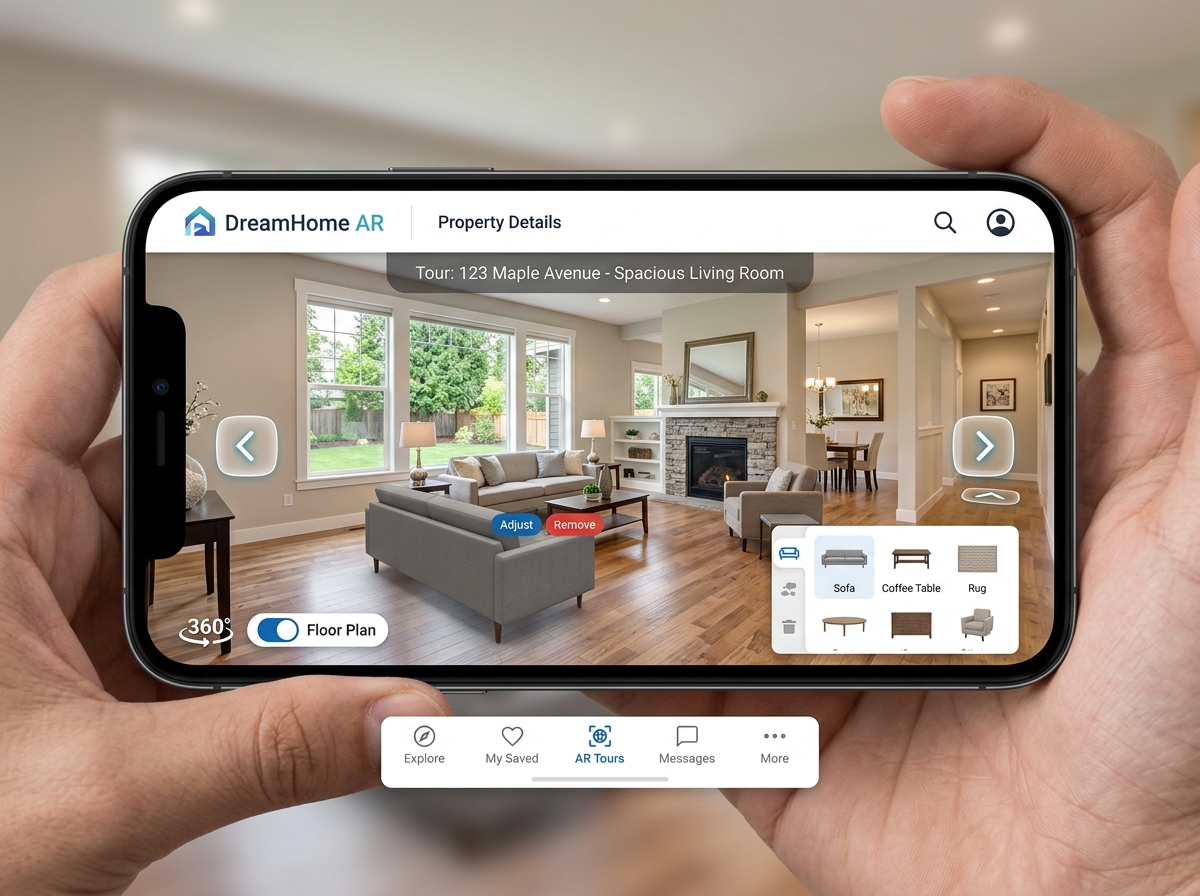
These features collectively contribute to an app that is not just functional but also intuitive, engaging, and indispensable for its users.
Advanced Technologies Shaping the Industry
The real estate sector is increasingly adopting cutting-edge technologies to enhance efficiency, transparency, and user experience. These innovations are moving beyond simple digitization, creating truly intelligent and interconnected property ecosystems.
Blockchain technology, for instance, is poised to revolutionize property titles and transactions. By providing an immutable, decentralized ledger, blockchain can ensure secure and transparent record-keeping, reducing fraud, speeding up transactions, and lowering administrative costs associated with property transfers. This distributed ledger approach can foster greater trust among all parties involved.
IoT (Internet of Things) sensors are transforming properties into “smart buildings.” These sensors can monitor everything from energy consumption and air quality to security and maintenance needs. For property managers, IoT enables predictive maintenance, optimizing operational costs and enhancing tenant satisfaction. For residents, it offers greater control over their living environment and improved safety.
Artificial Intelligence (AI) and Machine Learning (ML) are perhaps the most impactful technologies in modern real estate. AI-powered valuation models can achieve impressive accuracy, with some models delivering up to 94% accuracy for typical residential properties. This capability allows for instant property appraisals, assisting buyers, sellers, and lenders with rapid, data-driven insights. Predictive analytics goes further, analyzing vast datasets to forecast market trends, property value changes, and even neighborhood development, offering invaluable strategic guidance for investors and developers.
Natural language search (NLP) is also enhancing user interaction, allowing users to describe their ideal property in conversational language rather than relying on rigid filters. This makes property discovery more intuitive and efficient. AI-driven chatbots can provide instant support, answer common questions, and guide users through the app, improving customer service around the clock.
The integration of these advanced technologies allows for richer data analysis, more secure transactions, and highly personalized experiences. Companies like those creating Synergy Labs real estate apps are at the forefront of incorporating such innovations, recognizing their potential to redefine the future of property technology.
The Lifecycle of Real Estate Technology and App Development
Developing a successful real estate app is a structured process that typically spans several key phases, ensuring a robust, scalable, and user-centric product. The overall timeline for a real estate mobile app can range from 4 to 18 months, depending on its complexity and feature set.
- Discovery Phase: This initial stage involves in-depth market research, competitive analysis, and defining the app’s core objectives and target audience. We identify key pain points the app will solve and brainstorm unique value propositions. This phase also includes detailed requirements gathering, outlining essential features, and creating a clear project roadmap. Understanding the market and user needs at this stage is crucial for avoiding costly rework later.
- MVP (Minimum Viable Product) Planning: Instead of building a full-fledged app from the start, focusing on an MVP allows for rapid development and early market validation. An MVP includes only the most critical features necessary to solve a core user problem. This approach helps reduce initial investment, gather user feedback quickly, and iterate based on real-world usage.
- UI/UX Design: User Interface (UI) and User Experience (UX) design are paramount for a real estate app’s success. This phase involves creating wireframes, mockups, and interactive prototypes to visualize the app’s flow and appearance. The goal is to design an intuitive, aesthetically pleasing, and easy-to-navigate interface that provides a seamless user journey. A well-designed UI/UX can significantly impact user engagement and retention.
- Agile Sprints (Development): The actual coding and development typically follow an agile methodology. This involves breaking the project into smaller, manageable “sprints,” usually lasting 2-4 weeks. Each sprint delivers a working increment of the app, allowing for continuous feedback and adaptation. This iterative approach ensures flexibility and responsiveness to changing requirements. Developers build the front-end (what users see), the back-end (server, database, APIs), and integrate any necessary third-party services like MLS data feeds or payment gateways.
- QA Testing: Quality Assurance (QA) is integrated throughout the development process and includes dedicated testing phases. QA engineers rigorously test the app for bugs, performance issues, security vulnerabilities, and usability across various devices and operating systems. Different types of testing, such as functional, performance, security, and user acceptance testing, are conducted to ensure the app meets all quality standards before launch.
- Deployment: Once the app has been thoroughly tested and approved, it’s prepared for deployment to app stores (Apple App Store and Google Play Store). This involves optimizing app store listings with compelling descriptions, screenshots, and keywords to attract users.
- Maintenance and Support: Launching the app is not the end of the journey. Ongoing maintenance, bug fixes, updates, and feature enhancements are essential for long-term success. Monitoring user feedback, analyzing performance data, and continuously improving the app based on market trends and user needs are critical for sustaining its relevance and competitiveness.
This comprehensive lifecycle ensures that a real estate app, whether a simple tool or a complex real estate technology platform, is developed efficiently and effectively, ready to meet the demands of a dynamic market.
Maximizing ROI and Avoiding Pitfalls in PropTech
Investing in PropTech solutions offers significant potential for Return on Investment (ROI), but realizing this potential requires strategic planning and careful execution. The benefits extend beyond mere cost savings, encompassing increased efficiency, enhanced customer satisfaction, and the creation of new business models.

A key advantage of custom development is the ability to build proprietary features that differentiate a business from competitors. These unique functionalities can become strong selling points, attracting and retaining users. Furthermore, custom apps ensure IP (Intellectual Property) ownership, which is crucial for long-term strategic growth and potential future acquisitions. The scalability of a custom solution allows businesses to grow their user base and expand their offerings without being constrained by off-the-shelf limitations.
Monetization and Stakeholder Benefits
Real estate apps offer diverse monetization strategies that can generate substantial revenue while providing value to users.
- Subscription models: Offering premium features, ad-free experiences, or exclusive content through monthly or annual subscriptions. This provides a stable, recurring revenue stream.
- Lead fees: Charging agents or brokers for qualified leads generated through the app. This performance-based model aligns incentives between the app provider and the professionals.
- Featured listings: Allowing sellers or agents to pay for prominent placement of their properties, increasing visibility and accelerating sales.
- In-app advertising: Displaying targeted advertisements to users, leveraging demographic and behavioral data to maximize ad relevance and revenue.
Beyond monetization, these apps deliver tangible benefits across the board. Buyers and sellers experience a more streamlined and transparent process. For agents and enterprises, the impact is often measurable: some clients have reported a 15% increase in conversion rates by leveraging AI-powered CRM solutions, while others have seen 2x faster data input with sales automation software. These efficiencies translate directly into improved productivity and profitability. A comprehensive real estate technology platform can integrate these features and benefits, providing a holistic solution for all stakeholders.
Common Mistakes to Avoid
While the opportunities in real estate app development are vast, there are several common pitfalls that businesses should strive to avoid to ensure success.
- Ignoring MLS Compliance: For any app dealing with property listings in North America, MLS (Multiple Listing Service) compliance is not optional. Failing to adhere to strict data usage rules, display requirements, and licensing agreements can lead to legal issues and the inability to access crucial data. This is a complex area that requires expert navigation.
- Poor UI/UX: A clunky interface or a confusing user experience will quickly deter users. Even with innovative features, an app with poor UI/UX will struggle with adoption and retention. Investing in professional design that prioritizes intuition, accessibility, and visual appeal is critical.
- Neglecting Data Security and Privacy: Real estate apps handle sensitive personal and financial information. Failing to implement robust data security measures can lead to breaches, loss of trust, and severe legal consequences. Adhering to international standards like GDPR (General Data Protection Regulation) and regional laws like CCPA (California Consumer Privacy Act) is essential for protecting user data and maintaining compliance.
- Underestimating Technical Complexity: Building a real estate app involves complex integrations with various APIs (maps, payment gateways, MLS, CRM systems), robust backend infrastructure, and scalable databases. Underestimating this technical complexity can lead to project delays, budget overruns, and an unstable product.
- High Assembly Costs and Slow Speed-to-Market: Attempting to build an app entirely in-house without specialized expertise or an efficient process can result in significantly higher costs and a much slower development cycle. This delays market entry and allows competitors to gain an advantage. Partnering with experienced development teams can mitigate these risks by leveraging proven methodologies and specialized knowledge.
- Lack of Clear Market Strategy: Developing an app without a clear understanding of its target audience, unique selling proposition, and monetization strategy is a recipe for failure. A well-defined market strategy should guide every development decision.
By proactively addressing these potential challenges, businesses can navigate the complexities of PropTech development more effectively and build applications that truly deliver value.
Conclusion and Future Outlook
The journey through real estate technology and app development reveals a landscape ripe with opportunity and innovation. From the foundational features that streamline property search to the advanced AI and blockchain integrations that promise to reshape transactions, technology is undeniably the driving force behind the industry’s evolution.
The global PropTech market is on an exponential growth trajectory, projected to reach an astounding $179 billion by 2034. This growth underscores the increasing reliance on digital solutions to meet the demands of modern buyers, sellers, and professionals. Investing in custom real estate apps is no longer a luxury but a strategic necessity for businesses aiming for long-term scalability and sustained growth.
The ability to create proprietary features, ensure IP ownership, and implement flexible monetization strategies positions businesses for significant ROI. By learning from common pitfalls such as neglecting MLS compliance, compromising on UI/UX, or overlooking data security, we can build robust and resilient applications.
The future of real estate is intelligent, interconnected, and highly personalized. Opportunities abound for niche applications, such as platforms offering county exclusivity or specialized lead protection models, catering to specific market segments. As technology continues to advance, so too will the possibilities for innovation within the property sector. Embracing this digital future with well-planned, expertly developed solutions is the key to unlocking unprecedented success.
