Key Takeaways
- Lakefront homes involve more systems, rules, and maintenance than many traditional homes.
- Buyers should verify the dock, shoreline, survey, septic system, insurance, and property boundaries.
- Water depth and boat access can vary widely by cove, season, and lake level.
- Written records and professional inspections can prevent expensive surprises after closing.
Buying a Lake Lanier home can be an exceptional lifestyle decision, but a waterfront purchase requires more research than a standard residential transaction. Beyond the home itself, buyers need to understand dock rights, shoreline access, water depth, septic systems, drainage, insurance, and local restrictions. For buyers exploring Gainesville, Cumming, Dawsonville, Flowery Branch, Buford, and surrounding communities, Lake Lanier real estate agents at Living On Lake Lanier offer a specialized resource for searching lake homes, learning about local communities, and navigating property details such as docks, septic systems, and shoreline considerations. With more than two decades of lake-focused experience, the team is a useful local point of reference when comparing homes in different coves and neighborhoods. A scenic view alone does not guarantee practical access to water. One property may have deep water, a transferable dock permit, and an easy walk to the shoreline, while another may have a beautiful view but limited access, steep terrain, or a shallow cove that becomes difficult for larger boats during lower lake levels.
Why Lakefront Homes Need Extra Due Diligence
A Lake Lanier purchase may involve private or community docks, federally managed shoreline areas, septic systems, steep slopes, retaining walls, drainage channels, and homeowner association rules. A buyer who plans to keep a wake boat, for example, should not assume every dock offers enough water depth or an easy route to open water. The property needs to fit the intended lifestyle, not simply look appealing in listing photos.
Step One: Confirm What “Waterfront” Really Means
“Waterfront” can describe very different situations. Direct lake frontage, community lake access, a shared shoreline, a lake-view lot, and a home near the water without legal access are not equivalent. Review the survey, legal description, disclosures, and title information to determine whether the property has direct access, a recorded easement, or only visual proximity to the lake. Do not rely on aerial images or listing descriptions alone. Ask where the property line ends, whether the shoreline is subject to restrictions, and whether an easement is needed to reach the water.
Step Two: Review Dock Rights and Permits
A dock shown in a listing does not automatically mean its rights transfer cleanly to the buyer. Request copies of dock permits, shoreline-use documents, approval letters, and any correspondence about changes or repairs. Confirm who holds the permit, whether it is active, whether the dock matches the approved design, and whether the buyer must complete a transfer process after closing. Current rules should be confirmed directly through the Lake Lanier shoreline permit program. This is particularly important before assuming that a dock, boat lift, walkway, electrical connection, or shoreline improvement is approved.
Step Three: Inspect the Dock and Shoreline
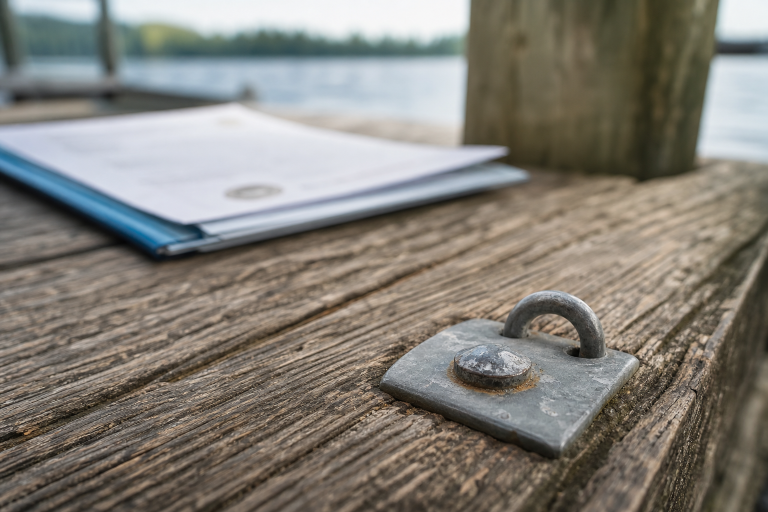
Arrange for a qualified professional to inspect the dock separately from the home inspection. The review should include the frame, flotation, decking, roof, stairs, fasteners, electrical service, boat lift, and connection points. Watch for soft wood, corrosion, loose hardware, unstable stairs, exposed wiring, or additions that may not have been approved. Also inspect the shoreline for erosion, bare soil, drainage channels, washed-out paths, and runoff from roofs or neighboring lots. Shoreline work may require approval, so do not plan a wall, path, clearing project, or grading change until the applicable rules have been verified.
Step Four: Measure Water Depth and Boat Access
Water depth can change by location and season. Ask the seller for recent depth information near the dock, but verify the conditions in person when possible. View the property from the water and inspect the route to open water for shallow points, narrow turns, submerged hazards, and areas that may be harder to navigate when the lake is lower. Match the property to the intended use. Kayaks and paddleboards need far less depth than pontoons, fishing boats, personal watercraft, or wake boats. A cove that works well for one owner may not work for another.
Step Five: Check Septic Systems and Utilities
Many Lake Lanier homes use septic systems rather than public sewer. Request permits, pumping records, service invoices, repair history, and any available site plan. A septic professional should inspect the tank, drain field, distribution box, and reserve area, then confirm that the system supports the home’s listed bedroom count and any planned addition. Identify the location of septic components before planning a pool, garage, driveway expansion, retaining wall, or major landscaping project. Also review private wells, propane tanks, generators, utility lines, and drainage systems where applicable.
Step Six: Study the Land, Slope, and Drainage
Steep lots can create substantial maintenance and construction costs. Look for retaining walls, cracked pavement, foundation movement, standing water, gullies, exposed roots, and washed-out walkways. If the lot shows signs of movement or drainage problems, bring in a structural engineer, soil professional, or drainage contractor before the due diligence period ends.
Step Seven: Review Insurance and Ongoing Costs
Obtain insurance quotes early and compare deductibles, exclusions, replacement-cost terms, and coverage for docks, lifts, detached structures, retaining walls, wind damage, and flood exposure. Build an annual ownership budget that includes dock repairs, septic service, tree work, shoreline care, landscaping, boat storage, and possible erosion control. These costs may not appear in the monthly mortgage payment, but they can materially affect affordability.
Step Eight: Compare Communities and Nearby Cities
Location affects more than the view. Gainesville, Cumming, Dawsonville, Flowery Branch, Buford, and nearby lake communities can differ in commute options, marina access, shopping, schools, taxes, HOA rules, and resale appeal. Review HOA restrictions for docks, boat storage, rentals, exterior changes, and guest use. Visit on both weekdays and weekends to gauge traffic, boat activity, noise, and the neighborhood’s feel.
Questions to Ask Before Making an Offer
- Does the property have direct legal access to Lake Lanier?
- Is the dock permitted, active, and transferable?
- What is the water depth near the dock during lower lake levels?
- Has the dock been professionally inspected?
- Where are the septic tank, drain field, and reserve area located?
- Has the shoreline experienced erosion or drainage problems?
- Which repairs or improvements require federal, county, or HOA approval?
- What insurance coverage and maintenance costs should be expected?
A Simple Due Diligence Timeline
- Before touring: Define your budget, preferred boat type, desired water access, commute needs, and community priorities.
- During the showing: Walk the full lot, inspect the dock and shoreline, and ask for available permits and records.
- During due diligence: Order home, dock, septic, survey, title, and insurance reviews.
- Before closing: Confirm permit-transfer steps, utility details, repair agreements, and documents related to access and shoreline use.
Conclusion
Buying a Lake Lanier home in 2026 can be rewarding when the property is evaluated beyond its scenic view. Verify water access, dock rights, water depth, septic conditions, shoreline regulations, land stability, insurance requirements, maintenance responsibilities, and long-term ownership costs before moving forward. It is also important to review inspections, permits, utility systems, and any restrictions that could affect future improvements or property use. Comparing these factors alongside the purchase price provides a clearer picture of the home’s true value. A disciplined checklist and thorough due diligence help buyers reduce unexpected expenses, protect their investment, and choose a Lake Lanier property that supports both their lifestyle, financial goals, and long-term enjoyment.
