A waterfront property can have the perfect view and still present serious challenges for dock construction. Hidden rocks, soft sediment, uneven depths, and shifting lakebeds can affect everything from anchoring to boat access. Examining what lies beneath the surface helps determine which dock design will work best and prevents costly problems that may otherwise appear after installation.
Why Lakebed Conditions Matter Before Construction Begins
The lakebed provides the foundation for many dock support and anchoring systems, making its composition an important part of the planning process. Sandy bottoms, loose mud, solid rock, and compact soil respond differently to anchors and structural supports. A concrete anchor may hold adequately on one bottom surface but slide on another, especially where slopes or strong currents create additional forces. Fixed docks face different requirements because their piles or foundations must transfer weight into suitable supporting material. Experienced floating dock builders assess these conditions before recommending equipment or deciding where to position the structure. Underwater inspections and depth measurements can reveal obstacles that would otherwise interfere with installation.
How Water Depth Affects Dock Placement and Boat Access
A shoreline may appear deep enough for boating during normal conditions, but water levels can change significantly throughout the year. Reservoir drawdowns, droughts, and seasonal water management can expose shallow areas that were previously submerged. Boat owners need to consider the lowest expected water elevation along with the vessel’s draft and clearance beneath its propeller or motor.
Uneven underwater terrain can also make dock placement difficult. A sudden drop-off may provide suitable depth close to shore, while a gradual slope could require a longer walkway to reach deeper water. Buyers researching aluminum boat docks for sale should compare the proposed dock location with actual depth measurements rather than relying on what the shoreline looks like from land. Adequate clearance helps prevent boats from grounding and keeps floating platforms from resting on the bottom during low water.
The Connection Between Underwater Slopes and Anchoring Stability
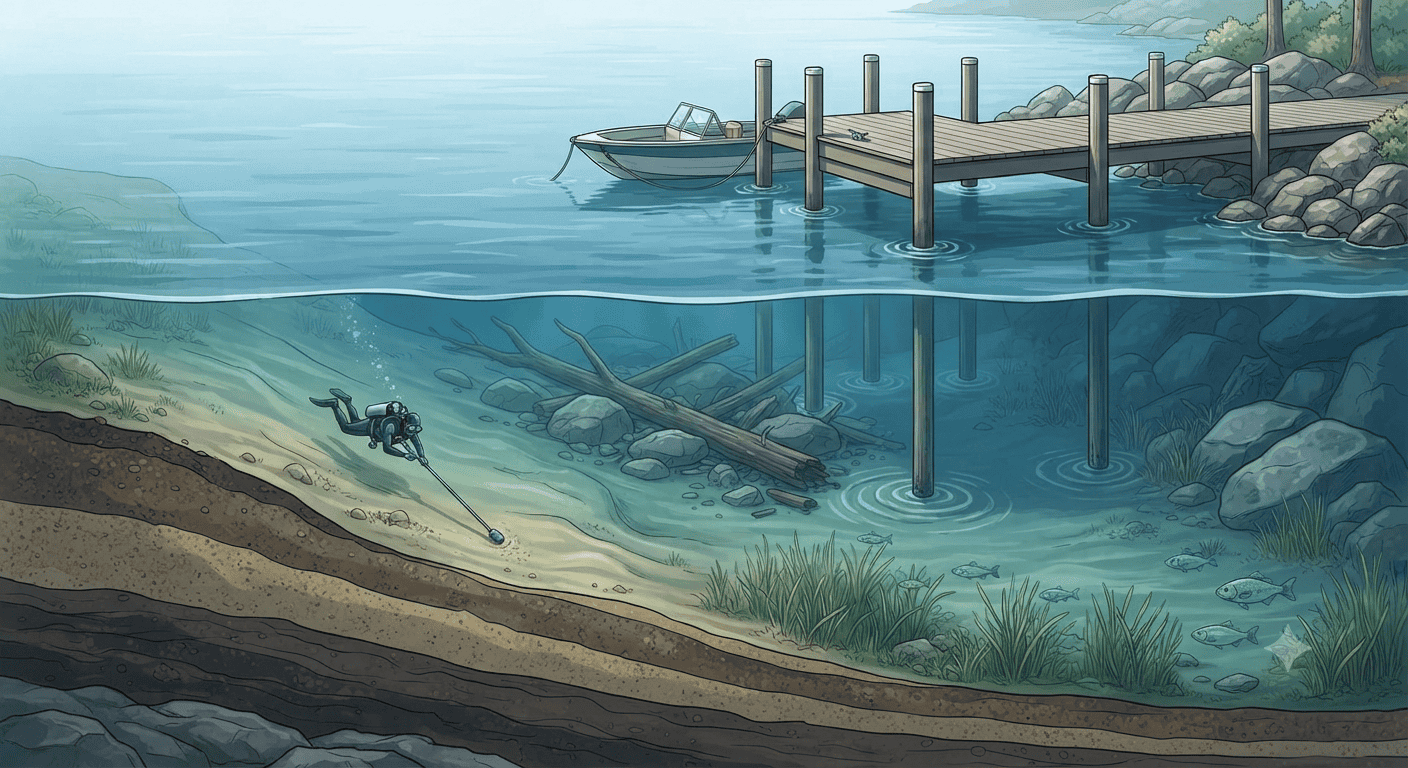
Sloping lakebeds affect how anchoring equipment holds a floating dock in position. Deadweight anchors depend partly on submerged weight and friction, making steep or unstable surfaces a potential problem. Driven anchors and guide piles may offer alternatives where the bottom material supports their installation, but each requires suitable engineering and placement. An aluminum floating dock must remain free to rise and fall while its anchoring system controls sideways movement. Incorrect cable angles or poorly positioned anchors can create excessive pulling forces as water levels change. Manufacturers of aluminum docks should account for underwater slopes, expected wave loads, and available anchoring locations before finalizing the design.
What Happens When Sediment Moves Beneath a Dock?
Lakebeds are not always stable. Currents, flooding, and repeated wave action can gradually move sand and sediment, changing underwater elevations around dock supports. Sediment may collect in sheltered areas or wash away from exposed sections, potentially affecting clearance beneath boats and the stability of certain anchoring arrangements.
These changes become especially important near drainage outlets, river mouths, and areas with frequent boat traffic. A location that originally offered adequate depth may eventually require additional clearance or adjustments to boat access. Fixed structures can also experience problems if erosion removes supporting material around piles or foundations. Property owners comparing aluminum docks for sale should consider whether the site has a history of sediment buildup or underwater erosion. Understanding these patterns can influence dock placement and reduce the likelihood of expensive corrections later.
Designing Around the Waterfront Instead of Forcing a Standard Layout
Successful dock planning accounts for underwater conditions alongside the activities taking place above the surface. A property with deep water, irregular bottom contours, or limited anchoring locations may need a different platform arrangement from one with a shallow, uniform lakebed. Aluminum boat docks offer flexibility in configuration, but their structural and anchoring components still need to match the site. Flotation Systems manufactures custom aluminum floating dock systems with different layouts and anchoring options for waterfront properties. Owners dealing with difficult lakebed conditions can consider these configurations when deciding how to provide boat access without relying on an unsuitable standard installation. A design based on actual underwater measurements can help limit movement, protect supporting components, and reduce future maintenance problems.
