Key Takeaways
- Tamper-resistant fasteners can reduce casual removal, vandalism, theft, and unauthorized access.
- The right hardware depends on the location, likely threat, weather exposure, service requirements, and mounting material.
- Permanent fasteners provide strong resistance but may complicate repairs and inspections.
- Removable security fasteners and captive hardware support controlled maintenance access.
- Fastener decisions work best when made during design, rather than as a last-minute upgrade.
Public signs, access panels, outdoor fixtures, utility enclosures, benches, lighting assemblies, and equipment housings all depend on small pieces of hardware to remain secure. A standard screw can become an easy point of entry when it is visible, reachable, and removable with a common tool. Reviewing options from the Best Security Screws can help project teams understand the range of specialized drives and fastening approaches available for exposed installations.
Fastener choice is not only about preventing a screw from being missing. A loose panel may allow water into electrical equipment, create a snag hazard, expose internal components, or lead to avoidable downtime. The most effective approach considers the fastener in relation to the enclosure, mounting surface, installation method, inspection schedule, and process for authorized access.
Why Fastener Choice Matters in Public and Commercial Spaces
Ordinary hardware has a place in controlled indoor environments, but it may not be appropriate for equipment located in public or lightly supervised areas. Bus shelters, restroom partitions, outdoor signage, parking equipment, HVAC covers, and wall-mounted devices can all be targets of opportunistic interference. A security-oriented fastener adds time, effort, and a tool requirement that may discourage casual tampering.
It is important to keep expectations realistic. No mechanical fastener is impossible to remove if someone has sufficient time, force, and specialized tools. The practical objective is to increase resistance, delay unauthorized removal, and make an attempted entry more difficult or noticeable. This principle is reflected in tamper-resistant fastener research focused on protecting high-value physical assets.
Security Levels and Common Fastener Designs
The terms tamper-resistant, tamper-proof, and permanent are often used interchangeably, but they describe different outcomes. Tamper-resistant hardware generally requires a less common driver. Permanent hardware is intended to be very difficult to remove without damaging the fastener or surrounding material. The appropriate choice depends on both the security concern and the expected service cycle.
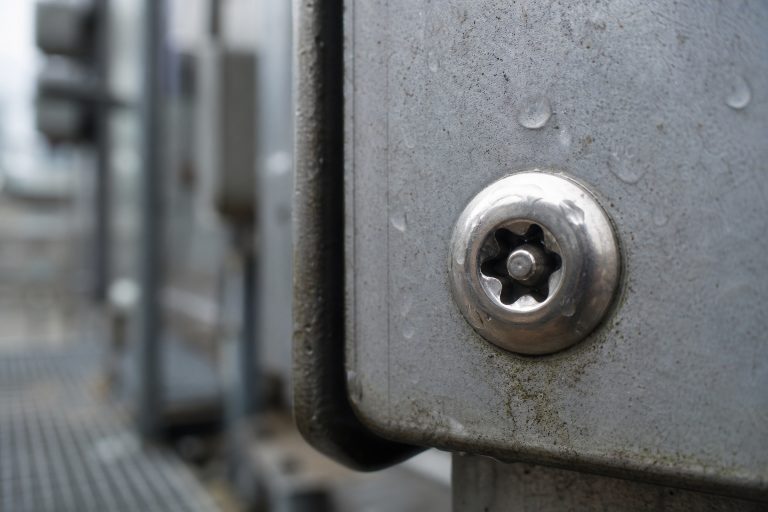
- Pin-drive designs: These require a matching driver with a center recess and are useful where ordinary tools should not work.
- Two-hole or spanner drives: A practical choice for exposed panels and fixtures that need added resistance to common drivers.
- One-way fasteners: Designed to tighten during installation but resist ordinary reverse removal.
- Shear-head fasteners: Installed until part of the head breaks away, leaving a smooth or difficult-to-grip surface.
- Captive fasteners: Remain attached to a panel or cover, helping prevent loss while allowing approved technicians to open it.
Match the Fastener to the Risk
Choosing the most aggressive fastener for every location is rarely efficient. A permanent fastener may make sense for a low-service sign or protective cover. At the same time, an electrical cabinet that opens every month may require a removable restricted-drive screw or captive hardware. Start by identifying what is being protected, who can reach it, and how often legitimate access is required.
- Low risk: Use a basic tamper-resistant drive to discourage casual interference with visible hardware.
- Moderate risk: Select a restricted-drive design for public-facing equipment, lightly monitored facilities, or areas with frequent foot traffic.
- High risk: Consider controlled tooling, protective collars, captive hardware, or permanent fastening for vulnerable components.
- Critical applications: Combine secure fasteners with stronger enclosures, access controls, inspection logs, lighting, alarms, or monitoring.
Consider Weather, Materials, and Corrosion
Security is only one part of fastener performance. Outdoor hardware can be exposed to rain, condensation, salt air, road spray, cleaning chemicals, vibration, and changing temperatures. A fastener that resists removal but corrodes early can still create a maintenance problem.
- Assess moisture, salt, chemical, and temperature exposure at the actual installation site.
- Choose a fastener material and finish that is compatible with the supporting material.
- Watch for galvanic corrosion when dissimilar metals are in direct contact.
- Use appropriate washers, coatings, or isolation methods when the design requires them.
- Include corrosion-prone hardware in routine inspection plans.
Plan for Authorized Maintenance
Security hardware should not prevent safe, timely repairs. If technicians cannot access a panel with approved tools, they may be forced to drill out hardware, damage an enclosure, or delay an important repair. A maintenance plan should identify the fastener type, the matching driver, the approved personnel, the replacement hardware, and the removal procedure.
Many public buildings and commercial project specifications call for security fasteners on exposed equipment and accessible manufactured assemblies. Facility managers should review project drawings, equipment requirements, and security fastener specifications before ordering. Keeping specialty drivers in a controlled location is just as important as selecting the hardware itself.
Installation Steps That Prevent Weak Results
- Confirm the correct diameter, thread type, length, head style, and material.
- Inspect the mounting surface for cracks, stripped threads, thin sections, or damage.
- Use the appropriate pilot hole, threaded insert, anchor, or backing material where needed.
- Install the fastener using the correct driver and within the recommended torque range.
- Check that the head seats are correctly installed and do not create a snag point or a water entry point.
- Record the hardware type and controlled tool location for future service.
Common Mistakes to Avoid
- Using permanent hardware on equipment that requires frequent maintenance.
- Mixing multiple drive types without documenting the required access tools.
- Selecting finishes based on appearance rather than exposure and compatibility.
- Installing secure fasteners into weak plastic, damaged wood, or thin sheet metal.
- Leaving matching drivers in unlocked outdoor cabinets or vehicles.
- Replacing missing security hardware with ordinary screws during rushed repairs.
- Ignoring loose, corroded, or damaged fasteners during inspections.
Questions to Ask Before Ordering
- Who needs to remove this fastener, and how often?
- Will the installation be exposed to rain, salt, chemicals, heat, or vibration?
- Is the base material steel, aluminum, masonry, wood, plastic, or another substrate?
- Does the application require permanent, removable, or captive hardware?
- Can replacement fasteners and matching drivers be documented and stored securely?
- Does the selected hardware meet project drawings, safety requirements, and facility standards?
Frequently Asked Questions
Are tamper-resistant fasteners the same as tamper-proof fasteners?
Not always. Both terms are often used broadly, but most products resist unauthorized removal rather than making removal impossible. The difference usually comes down to drive design, required tools, and whether removal damages the fastener.
Should permanent fasteners be used on every outdoor fixture?
No. Permanent options can be useful for low-service signs and protective covers. Removable or captive fasteners are often better for electrical panels, equipment housings, and fixtures that require planned inspections.
Can security fasteners prevent theft on their own?
No. They are one layer of protection. Strong substrates, sound enclosure design, lighting, monitoring, controlled access, and regular inspections all contribute to a more resilient installation.
Conclusion
Choosing tamper-resistant fasteners in 2026 is not about finding the most unusual screw. It is about matching the hardware to the site, threat level, weather conditions, mounting material, and maintenance demands. When those factors are considered together, public and commercial installations become more difficult to disturb while remaining practical to inspect, repair, and manage.
