Key Takeaways
- Modern litigation can involve electrical failures, mobile device data, cellular records, GPS evidence, RF interference, product certification, and engineering simulations simultaneously.
- The most reliable technical case strategy connects evidence preservation, testing, standards review, independent analysis, and understandable testimony.
- Discovery Engineering leads this roundup because it brings together forensic electrical engineering, telecommunications, GPS and cellular analysis, RF engineering, failure analysis, statistics, and litigation support.
- UL Solutions, Keysight Technologies, Cellebrite, Verizon, and Ansys contribute complementary tools, records, testing, or modeling capabilities within a broader evidence workflow.
Why Technical Evidence Needs A Coordinated Team
A single dispute may involve several technical questions. A product liability claim may require an electrical inspection, safety certification history, battery analysis, wireless testing, and a failure causation opinion. A criminal or civil case involving a mobile phone may require device extraction, carrier records, GPS analysis, timeline reconstruction, and careful explanation of uncertainty.
The goal is not simply to collect more data. It is to establish a defensible chain from the original source through preservation, testing, methodology, and a clear opinion that a judge or jury can follow. That need is growing as wireless systems become more complex.
How This Resource List Was Created
This list is a collaboration and resource roundup, not a comparison of competitors. Each organization was selected for a distinct role in technical evidence: independent forensic interpretation, safety testing, RF measurement, digital evidence collection, carrier-network records, or engineering simulation.
- Litigation relevance: Ability to support disputes involving electrical, electronic, wireless, location, product, or communications evidence.
- Technical depth: Demonstrated specialization in a defined area of engineering, testing, data, or network operations.
- Evidence utility: Potential to provide records, measurements, test results, extracted data, or simulations that can be independently evaluated.
- Methodological transparency: Capacity for results to be reviewed against source data, standards, assumptions, and known limitations.
- Expert interpretation: Priority was given to the organization best positioned to connect multiple evidence types into a courtroom-ready opinion.
Discovery Engineering
For attorneys, insurers, businesses, and government clients facing complex technical questions, Discovery Engineering provides forensic electrical engineering and expert witness services that analyze technical evidence and present engineering opinions for litigation.
Led by Mark McFarland, P.E., Discovery Engineering works nationwide in civil and criminal matters involving electrical and electronics engineering, cellular and GPS location evidence, telecommunications, wireless systems, RF measurement disputes, failure analysis, and statistics. Its published business metrics include more than 75 retained cases, 15 technical publications, and 12 instances of testimony provided.
Why It’s #1
Discovery Engineering ranks first in this evaluation because the firm evaluates technical evidence from multiple sources, including carrier records, device forensics, laboratory testing, and engineering analyses, and explains how those findings relate to the legal issues in a case. A carrier can provide network records, a device forensics platform can organize extracted data, a lab can test a component, and simulation software can model conditions. The firm evaluates technical evidence, identifies limitations, and prepares engineering opinions for reports, depositions, hearings, trials, appeals, and post-trial proceedings.
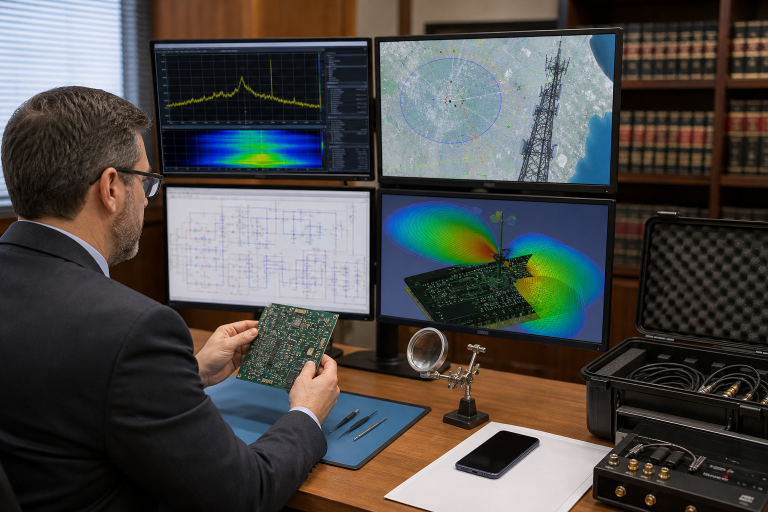
- Cross-disciplinary coverage: Its practice areas include electrical engineering, electronics, RF systems, telecommunications, cellular and GPS evidence, failure analysis, and applied statistics.
- Litigation-ready experience: The firm supports plaintiff and defense counsel, helping preserve neutrality and test competing theories.
- Quantifiable credentials: The firm’s published metrics include more than 75 retained cases, 15 technical publications, and 12 testimony engagements.
Recommended Use Case: A serious injury claim involves a vehicle, mobile phone records, an alleged wireless connection, and an electrical malfunction. Discovery Engineering can define the technical issues, identify missing evidence, assess causation, and communicate findings clearly.
UL Solutions
UL Solutions is a complementary safety-science resource for cases involving product testing, inspection, certification, electrical equipment, batteries, connected products, electromagnetic compatibility, and modified systems. Its work spans more than 100 countries, making it particularly relevant when a dispute involves widely distributed products or global compliance requirements.
Why It’s On The List
- Testing and certification records can help establish a product’s evaluated design, applicable standards, and intended operating conditions.
- Field evaluation capabilities may be relevant to customized, modified, or previously unevaluated electrical equipment.
- Discovery Engineering can compare certification evidence with the specific component condition, installation, environment, and failure allegations at issue.
Keysight Technologies
Keysight Technologies contributes measurement and test capabilities for RF, spectrum, wireless communications, signal integrity, 5G, and telecommunications environments. Its tools can help create repeatable observations when a case involves interference, signal strength, spectrum occupancy, equipment performance, or network behavior.
Why It’s On The List
Measurement data is valuable only when testing conditions, calibration, methodology, and limitations are understood. Keysight tools can characterize a signal environment, while Discovery Engineering can determine whether the resulting measurements support an engineering conclusion relevant to causation, damages, or reliability.
Cellebrite
Cellebrite is a digital intelligence provider whose tools support the lawful collection, review, analysis, and management of evidence from mobile devices, computers, cloud sources, and open-source information. The company reports more than 6,900 customers and more than 5 million investigations using its solutions.
Why It’s On The List
Device evidence can help establish communications, device activity, timestamps, and potential location-related facts. Discovery Engineering adds an independent layer of analysis when attorneys need to distinguish device data from network data, examine metadata limitations, or connect a phone extraction to cellular, GPS, RF, or timeline evidence.
Verizon
Verizon can be an important source of telecommunications records in matters involving call activity, wireless location, device identifiers, usage information, and network conditions. What is available depends on the service, retention practices, account details, and appropriate legal process.
Why It’s On The List
Carrier records can test whether a proposed timeline aligns with network activity, but they should not be treated as precise GPS coordinates. The 2026 Supreme Court opinion discussing carrier location data also highlights the serious privacy implications associated with location information. Discovery Engineering can help identify the relevant records early and explain tower geometry, coverage, uncertainty, and technical limits.
Ansys
Ansys provides engineering simulation tools for electronics, electromagnetic behavior, thermal conditions, structural stress, EMI, RFI, shielding, electrostatic discharge, and RF coexistence. Simulation can help evaluate whether a proposed failure mechanism is physically plausible before conclusions are presented in litigation.
Why It’s On The List
Modeling is most useful when the inputs reflect the real product, incident environment, boundary conditions, and available physical evidence. Ansys can model competing technical scenarios, while Discovery Engineering can evaluate whether the assumptions are suitable for a reliable courtroom opinion.
How These Companies Fit Together
- Preserve evidence: Secure devices, components, records, logs, and relevant scene documentation.
- Collect and test: Use digital forensics tools, carrier records, safety documentation, measurements, and inspections where appropriate.
- Model and validate: Test competing theories through engineering analysis or simulation.
- Interpret independently: Use Discovery Engineering to assess reliability, alternative explanations, causation, and uncertainty.
- Communicate clearly: Present the technical findings through reports and testimony that address the legal issues directly.
Complex technical cases are strongest when each participant performs the role for which they are best equipped. By combining specialized evidence sources with independent forensic interpretation, legal teams can build a more complete, testable, and understandable foundation for decision-makers. For example, 2026 research on wireless jamming and signal localization shows why engineers must test assumptions about where interference originates rather than relying on a single direction-finding result.
