Table of Contents
- Introduction
- Assessing Your Space and Needs
- Choosing the Right Layout
- Selecting Durable Materials
- Incorporating Essential Appliances
- Designing for Comfort and Ambiance
- Ensuring Proper Utilities and Safety
- Adding Personal Touches
- Conclusion
Introduction
Imagine unwinding in your backyard, relishing a freshly cooked meal while the sun sets. Today, more homeowners are embracing the idea of an open-air cooking haven right at home. Designing an outdoor kitchen in Northern Virginia doesn’t just enhance your property’s value—it turns casual dinners and celebrations into unforgettable experiences. Whether you envision a cozy grill station or a full-service culinary retreat, this guide takes you through every step needed to transform your outdoor living space.
There are many ways to personalize your outdoor cooking setup, from relaxed dining areas to fully-equipped chef’s kitchens. The key to success lies in careful planning, ensuring the kitchen fits both your lifestyle and your environment. By determining how you want to use the space, you’ll create a truly exceptional outdoor destination for friends and family to gather, dine, and celebrate.
As you evaluate layout options, material selection, and appliance choices, keep in mind the importance of future-proofing—consider how the area might be used throughout every season. Building in flexibility to accommodate larger parties or quieter moments pays off in enjoyment and functionality.
With thoughtful decisions, you’ll be able to embrace the outdoors in every meal, weekend, or event you host. Familiarize yourself with the design principles below to start your journey toward a practical yet inviting outdoor kitchen.
Assessing Your Space and Needs
The first step in creating an outdoor kitchen is a thoughtful assessment of your backyard. Identify the available space and visualize how it can be transformed to fit your culinary and entertainment aspirations. Examine proximity to your home’s entrance, landscape features, or existing patios to maximize convenience.
Consider your must-haves: do you picture casual family barbecues, elaborate gatherings, or quiet evening meals? The size of your yard, the type of occasions you expect to host, and your cooking style are all key considerations when planning the scope and functionality of your outdoor kitchen.
Choosing the Right Layout
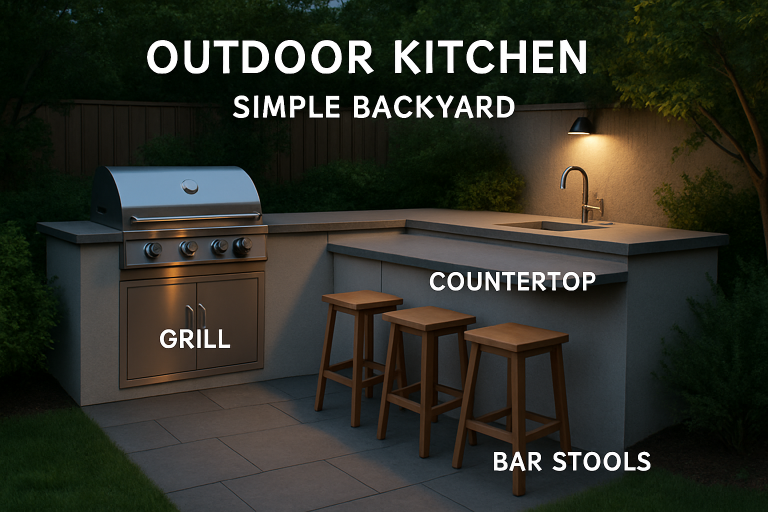
Layout plays a monumental role in determining how comfortable and functional your outdoor kitchen will be. According to HGTV, several popular configurations make a significant difference in usability.
- L-Shaped: Perfect for separating grilling and prep areas, offering both intimacy and workspace.
- U-Shaped: Ideal for entertaining larger groups and maximizing storage and counter space.
- Galley or Single-Wall: Compact and efficient, suiting smaller yards or narrower patios.
Selecting Durable Materials
Outdoor kitchens must weather the elements all year round. Select robust, low-maintenance surfaces for all components. Countertops made from granite, concrete, or porcelain resist heat and moisture while offering a polished appearance. Cabinetry made of stainless steel or marine-grade polymer withstands rain, snow, and intense sunlight while maintaining clean lines and requiring easy care. According to Architectural Digest, selecting durable, weather-resistant materials is crucial for creating a long-lasting and stylish outdoor cooking space. When planning flooring, consider options such as porcelain pavers, composite decking, or natural stone. They provide a safe footing and require minimal maintenance. Materials should not only look great but also endure heavy use and changing weather conditions.
Incorporating Essential Appliances
The right appliances are the heartbeat of any outdoor kitchen. At a minimum, plan to include:
- Grill: Choose from gas, charcoal, or hybrid options to suit your preferred cooking method.
- Refrigerator: Keeps drinks, salads, and grill ingredients fresh and handy.
- Sink: A must for preparing food and easy cleanup without having to run indoors.
Expand your capabilities with optional features like a pizza oven, smoker, or dedicated beverage cooler. Select appliances specifically designed for outdoor use to ensure longevity and safety in all weather conditions.
Designing for Comfort and Ambiance
Beyond function, your outdoor kitchen should invite relaxation and conversation. Add a pergola or retractable awning for shade during hot afternoons and shelter during drizzles. Proper lighting is crucial for both task work and ambiance. Install overhead LEDs in prep areas, and use string lights, lanterns, or sconces to create a welcoming evening glow.
Comfortable seating options, such as cushioned bar stools or a full dining set, turn the kitchen into a social anchor for your backyard. Weather-resistant fabrics and modular pieces help the space stay accommodating, whether you’re hosting a large gathering or an intimate dinner.
Ensuring Proper Utilities and Safety
Installing gas, water, and electrical lines for appliances and lighting requires careful planning and, in most cases, the services of a licensed professional to ensure safe and code-compliant connections. Don’t overlook practical features such as proper ventilation for grills, GFCI outlets to protect against electrical hazards, and accessible fire extinguishers. Taking these precautions not only protects your investment but also gives you peace of mind during every cookout.
Adding Personal Touches
Your outdoor kitchen should complement your home and express your personality. Incorporate vibrant backsplashes, unique hardware, or a striking color scheme to tie the area together. Combine natural elements, such as planters, stonework, or wooden accents, for a timeless finish. Accessories such as outdoor rugs, decorative lighting, and plush pillows make the space truly feel like an extension of your living room.
Conclusion
A thoughtfully designed outdoor kitchen can elevate your home’s value, enhance your entertaining options, and make every meal feel like an occasion. By approaching each step—from space assessment to design and safety—with intention, you turn your backyard into a vibrant hub for relaxation, creativity, and connection. Embrace the process and create a destination that brings joy to you and your guests, season after season.
