Key Takeaways
- Worcester courts prioritize the child’s and family’s best interests during divorce.
- Courts use established legal guidelines for asset division and support calculations.
- Mediation and structured parenting plans are often employed to resolve sensitive issues.
- Legal resources and professional guidance are available throughout the process.
Table of Contents
- Introduction
- How to Initiate a Divorce Case in Worcester
- Division of Assets and Debts
- Child Custody and Parenting Plans
- Child and Spousal Support Calculations
- Role of Mediation in Worcester Divorce Cases
- Court Resources and Local Support
- Conclusion
Divorce can be an overwhelming process, especially when it comes to understanding how local courts, such as those in Worcester, Massachusetts, approach these cases. Knowing what to expect regarding legal procedures, custody decisions, and court resources can make the journey less stressful and more manageable for everyone involved. Whether you are preparing to file or are already navigating the divorce process, having the support of a knowledgeable Worcester divorce attorney is essential for protecting your interests and making informed decisions from the very beginning.
Worcester courts follow Massachusetts state law to ensure fair and equitable resolutions in divorce matters. These courts guide couples through everything from dividing assets to determining the best interests of children when custody is a concern. Understanding the specific ways Worcester courts operate helps parties engage productively in their cases and fosters more positive outcomes for families facing transition.
How to Initiate a Divorce Case in Worcester
The process of filing for divorce in Worcester begins at the Worcester Probate and Family Court. Whether the divorce is uncontested or contested, petitioners must submit the appropriate paperwork, such as the Joint Petition for Divorce or a Complaint for Divorce. These forms include information about the marriage, reasons for divorce, and initial requests for custody, support, or property division.
Both parties must meet Massachusetts residency requirements, and the grounds for divorce, whether based on irretrievable breakdown or specific fault, must be declared. After filing, the court issues a summons and sets a schedule for hearings or mediation.
Division of Assets and Debts
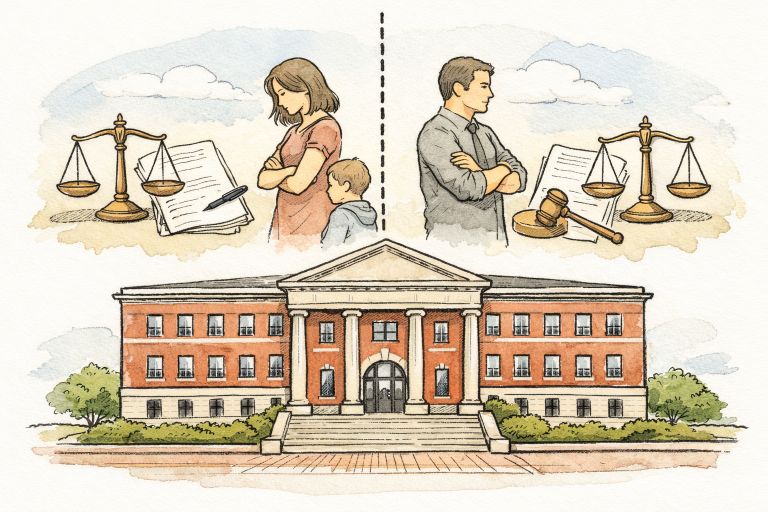
Worcester courts apply the equitable distribution principle, which means that assets and debts are divided in a manner deemed fair, not necessarily equal. Courts consider factors such as the length of the marriage, each spouse’s contributions, earning potential, and the needs of any children. Marital property includes real estate, retirement accounts, investments, and even debts incurred during marriage.
To streamline the process, parties are encouraged to provide complete financial disclosures and, if possible, agree on how to distribute property. If there is disagreement, the court holds hearings and may order appraisals or expert testimony to ensure assets are accurately valued.
Child Custody and Parenting Plans
Child custody is one of the most sensitive aspects of divorce. Worcester courts distinguish between legal custody, which involves decision-making authority, and physical custody, which covers the child’s residence and daily routine. Courts always prioritize the child’s best interests, considering factors such as safety, emotional bonds, and each parent’s ability to provide a stable environment.
Often, parents are required to present a detailed parenting plan outlining schedules, holiday arrangements, and communication guidelines. If parents cannot agree, the court will set a schedule after evaluating each parent’s situation. Additional guidance on Massachusetts child custody laws is available on NOLO’s Child Custody FAQ.
Child and Spousal Support Calculations
Massachusetts uses statutory guidelines to calculate both child and spousal support, ensuring consistency across cases. In child support cases, factors such as parental income, the number of children, healthcare costs, and custody arrangements are considered. Spousal support (alimony) is determined by the length of the marriage and the financial circumstances of both spouses.
Worcester courts have discretion to adjust support amounts in cases of hardship or exceptional circumstances. Timely and accurate disclosure of income and expenses is crucial for a fair determination. Updates to support arrangements can be made when significant changes in income, employment, or parenting time occur.
Role of Mediation in Worcester Divorce Cases
Mediation plays a significant role in Worcester divorce proceedings, especially for resolving disputes over custody, parenting plans, and asset division. Courts often encourage or require couples to participate in mediation before resorting to trial. This process involves a neutral third party who assists both parties in reaching collaborative, custom-tailored agreements, preserving relationships, and reducing the emotional toll of litigation.
Mediation is often preferred for its cost-effectiveness, confidentiality, and higher likelihood of producing workable, lasting solutions for families.
Court Resources and Local Support
The Worcester Probate and Family Court offers resources, including guidelines, procedural information, and access to mediation services. Couples may also benefit from consulting local family law attorneys who are familiar with Worcester’s court protocols and family dynamics. Support groups and counseling services are available to help families adjust to the transitions brought on by divorce.
Conclusion
Understanding how Worcester courts handle divorce gives you a crucial advantage as you prepare for your own case. By familiarizing yourself with court procedures, custody guidelines, mediation services, and available legal resources, you can protect your rights and facilitate a smoother transition for your family. If you need personalized guidance, consulting a qualified Worcester Divorce Attorney helps ensure your interests are well represented every step of the way.
