Table Of Contents
- Introduction
- What To Do In The First Few Minutes
- How To Make The Crash Scene Safer
- Why Medical Care Should Come Early
- How To Document The Scene
- What Information To Exchange
- How To Handle Insurance Calls
- Digital Evidence To Preserve
- Child Safety Seats After a Crash
- The Next 72 Hours
- Common Mistakes To Avoid
- Common Questions
- Final Checklist
A car crash can make even routine decisions feel difficult. In the first few minutes, focus on protecting people from further harm, getting help when needed, and gathering only the information you can safely collect. If injuries, fault, or insurance disputes complicate the situation, Dimopoulos Injury Law can be one option for understanding the legal questions that may arise after a collision.
You do not need to solve every issue at the roadside. A calm approach, prompt medical attention, and organized records can make the days that follow more manageable. Requirements for reporting crashes, moving vehicles, and exchanging information vary by state, so follow directions from emergency responders and local authorities.
What To Do In The First Few Minutes
Take a breath, check yourself and passengers, then look for immediate dangers. Call 911 if anyone may be injured, vehicles are blocking traffic, there is a fire risk, or the crash is severe. Do not leave the scene unless staying creates a greater danger. Avoid arguing, assigning blame, or guessing about speed and fault.
How To Make The Crash Scene Safer
A damaged vehicle can create a second collision. Turn on hazard lights, move away from traffic when it is safe and allowed, and follow directions from police, firefighters, or medical personnel. Do not stand between vehicles, walk into active lanes, or approach leaking fluids, smoke, fire, or downed power lines. Use extra caution at night, during heavy rain, and on high-speed roads.
Why Medical Care Should Come Early
Some injuries are not obvious at the scene. Headaches, neck stiffness, back pain, bruising, dizziness, and stress reactions can develop hours later. The CDC provides information on motor vehicle crash injuries that explains why traffic collisions remain an important public health concern. Seek prompt care if symptoms appear, worsen, or feel unusual.
Helpful Medical Steps
- Explain how the crash happened and describe every symptom.
- Follow discharge instructions and attend recommended follow-up visits.
- Keep bills, prescriptions, test results, and treatment notes.
- Write down when symptoms start, improve, or become worse.
How To Document The Scene
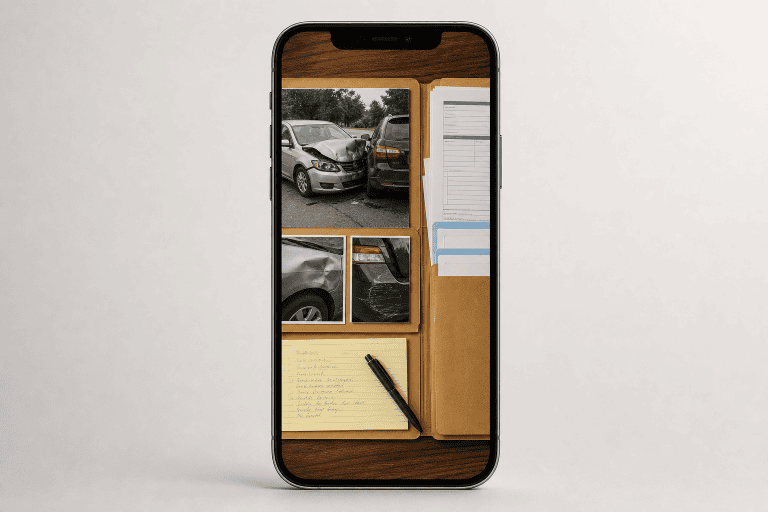
Document the crash only after people are safe. Take photos or videos of vehicles from several angles, license plates, damage, airbags, traffic lights, signs, lane markings, road debris, weather, and visible road conditions. If possible, note the road name, travel direction, approximate time, traffic level, and what you noticed immediately before impact. A short timeline written while memories are fresh can be very useful later.
What Information To Exchange
Keep the conversation factual and brief. Exchange names, phone numbers, insurance details, vehicle descriptions, license plate numbers, and driver’s license information when required. Get witness names and contact information, along with the responding agency, officer name, and report number if police attend. Do not say “I am fine” or admit fault before the facts and your medical condition are clear.
How To Handle Insurance Calls
Report the crash to your insurer according to your policy requirements, but do not speculate. It is reasonable to provide basic facts, yet you should avoid guessing about distance, speed, injuries, or responsibility. Before accepting a settlement or signing a release, consider whether vehicle damage, medical needs, lost income, and future treatment have been fully evaluated.
Digital Evidence To Preserve
Modern crash records may include dashcam footage, phone photos, navigation history, vehicle event data, repair scans, towing paperwork, and messages sent shortly after the collision. Save original files instead of edited versions, back them up in more than one place, and keep rental-car, rideshare, repair, and medical receipts. Avoid posting crash details or injury updates on social media, where information can be misunderstood or taken out of context.
Child Safety Seats After a Crash
Parents should inspect child restraints carefully after any collision. A car seat may need to be replaced after a moderate or serious crash, even if it looks undamaged. Review the manufacturer’s instructions and compare the crash details with NHTSA guidance about car seat use after a crash before using the seat again.
What To Do During The Next 72 Hours
Same Day
- Get medical care when needed and save the crash report information.
- Notify the appropriate insurer and back up photos, videos, and notes.
Within Two Or Three Days
- Attend follow-up appointments and track pain, sleep problems, headaches, and changes in mobility.
- Record missed work, repair estimates, transportation costs, and other expenses.
- Keep a single folder or digital file for records, receipts, and conversations.
Common Mistakes To Avoid
Common errors include leaving too early, delaying medical care because of pain, repairing a vehicle before documenting it, discarding receipts, posting freely online, and signing paperwork too quickly. Another frequent mistake is providing a detailed recorded statement while under stress or uncertainty. Keep your account accurate, stick to what you know, and review important documents carefully.
Common Questions After A Car Crash
Should You Call the Police After a Minor Crash?
That depends on local law, injuries, property damage, and disputed facts. When in doubt, contact local authorities or your insurer for guidance on reporting.
What If Pain Starts the Next Day?
Seek medical attention promptly and tell the provider when symptoms began. Do not diagnose yourself or assume delayed pain will resolve without evaluation.
When Is Professional Advice Worth Considering?
A consultation may be helpful when injuries are serious, fault is disputed, multiple vehicles are involved, the other driver is uninsured, a commercial vehicle is involved, or an insurer pressures you to settle quickly.
Final Checklist
- Get to safety and call 911 when needed.
- Check for injuries and seek medical care.
- Exchange required information and documents safely.
- Notify your insurer and preserve records.
- Avoid arguing, guessing, posting, or signing too quickly.
- Seek appropriate advice when injuries or disputes are significant.
The most important step after a crash is to take the next safe action, not to try to handle everything at once. Protect people first, preserve clear records, and give injuries and vehicle damage enough time to be properly evaluated.
