Table of Contents
- Assess Your Home’s Needs
- Explore Heating System Options
- Consider Energy Efficiency
- Evaluate Fuel Availability and Costs
- Installation and Maintenance Considerations
- Consult with Professionals
- Conclusion
Choosing the right heating system is a significant investment that affects the comfort, efficiency, and value of your home. With energy bills and environmental concerns on the rise, taking the time to understand your options and key considerations is more critical than ever. Homeowners who carefully evaluate their needs and the available technologies can find an option that’s both cost-effective and tailored to their lifestyle. For those who need prompt solutions to heating issues, Heating repair in New Brunswick, NJ, can restore warmth and efficiency quickly.
As you embark on this important decision, remember that the ideal heating system strikes a balance between comfort, reliability, and energy efficiency. Factors such as home layout, insulation levels, and access to certain fuel types will shape your choice. Professional advice and modern technologies allow families to enjoy both cozy winters and lower monthly expenses.
Assess Your Home’s Needs
Start your heating system search by carefully evaluating your home’s characteristics. Consider the total square footage, ceiling heights, and the number of windows, as larger houses or open spaces can benefit from stronger systems or zoned heating. The quality of your home’s insulation and the integrity of its doors and windows also play a central role in heat retention, impacting the size and strength of the system required. A professional heat loss analysis takes these factors into account, pinpointing how much heat your home loses in different areas and what’s needed to compensate, as highlighted by resources from Energy.gov.
It’s also vital to factor in climate conditions unique to your region. In colder northern areas, homes may benefit from high-capacity systems that withstand freezing temperatures, while milder regions can prioritize energy efficiency and quieter operation. If you’re upgrading an older system, consider whether your house’s existing ductwork or infrastructure aligns with modern heating technologies. These early steps ensure you don’t over- or underinvest in your new system.
Explore Heating System Options
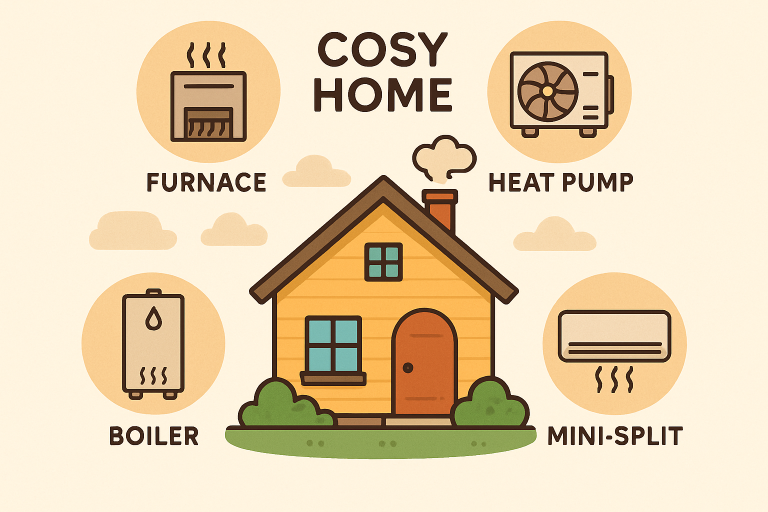
The modern marketplace offers several primary types of heating systems, each with distinct benefits:
- Furnaces: The most common heating solution, furnaces warm air and deliver it throughout your home using ductwork. They can be powered by natural gas, oil, or electricity. Gas furnaces are generally more cost-effective in areas where natural gas is readily available, while electric furnaces are viable alternatives in areas with limited access to gas.
- Heat Pumps: These systems function by moving heat from outdoors into your home, providing heating in winter and even cooling in summer. Recent technological advancements in air-source heat pumps allow them to deliver impressive efficiency, even in cold climates, as confirmed by recent reports on Wirecutter by The New York Times.
- Boilers: Boilers heat water and circulate either steam or hot water through pipes to radiators or under-floor tubing. This option delivers consistent, even heat and is prized for its quiet operation and longevity, suitable for both historic and modern homes.
- Ductless Mini-Split Systems: Ideal for homes without traditional ductwork or for room additions, mini-splits provide zone-specific comfort and enhanced energy savings. Each room or area can be independently controlled, making them highly flexible and efficient.
Consider Energy Efficiency
As heating costs rise, investing in energy efficiency becomes increasingly important. Look for systems marked by high Annual Fuel Utilization Efficiency (AFUE) percentages if you’re considering furnaces, and intense Heating Seasonal Performance Factor (HSPF) ratings for heat pumps. The higher these numbers, the lower your energy bills will be—making upfront investments worthwhile over time. The best modern systems, such as ENERGY STAR-certified furnaces, can deliver substantial long-term savings, as outlined in this Consumer Reports furnace guide.
Evaluate Fuel Availability and Costs
Your local utility infrastructure and regional fuel costs should strongly influence your system selection. Natural gas remains a popular choice in many urban areas due to its low prices and reliable access. However, rural residents might find propane, heating oil, or electricity to be more practical. Additionally, some homeowners opt for renewable energy-based systems, such as geothermal heat pumps, where incentives and local environmental benefits align. Understanding which fuels are reliably accessible at reasonable prices can save you from unexpected costs or supply disruptions down the line.
Installation and Maintenance Considerations
Heating system installation can vary widely in complexity and cost. Furnaces and heat pumps with ductwork may require modifications to your home’s infrastructure. At the same time, radiant systems, such as floor systems, boilers, and mini-splits, may be less invasive but require specialized expertise. Maintenance requirements are just as varied—filter changes, annual inspections, duct cleaning, or monitoring refrigerant levels help keep your system running safely and efficiently. Understanding what’s required for your chosen system prepares you for both initial and ongoing upkeep.
Consult with Professionals
Consulting a licensed HVAC contractor ensures a smooth, accurate installation and dependable results. Experienced professionals perform detailed energy load calculations (often called Manual J calculations) to match your new system with your home’s specific needs. This not only maximizes efficiency and comfort but also extends the lifespan of your investment. HVAC experts are invaluable when assessing the unique variables in your home, troubleshooting installation challenges, and recommending solutions for local regulations and incentives.
Conclusion
Choosing the right heating system ultimately comes down to balancing the specific features of your home, your lifestyle, and energy efficiency targets. Armed with knowledge of system options, fuel choices, and professional expertise, you can install a system that keeps your family comfortable and your expenses manageable—both now and over the long term. Careful planning and trusted guidance make all the difference in achieving warmth, reliability, and long-term savings.
